Blog
Learn How to Choose the Right LED COB Light for Your Space
Updated on Mar 2024
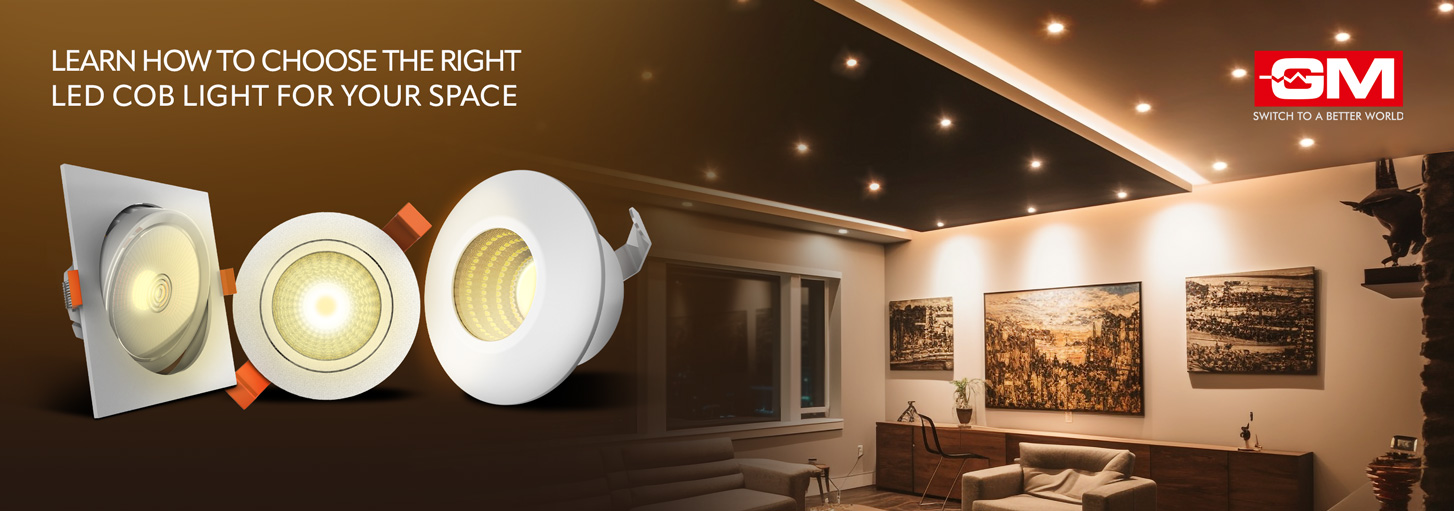
Planning and designing your dream home demands attention to detail in several realms, including construction materials, wall colours, and home lighting. Each element can make or break the aesthetics of your abode. Home lighting, being at the forefront of interiors, demands thorough consideration when making the right choice. When going through a plethora of lighting catalogues, you might have come across the mighty LED COB light, a spotlight that can easily highlight a particular display or enhance the space’s overall elegance. These lights are popularly installed in various settings for their compactness, energy efficiency, long lifespan, versatility, and outstanding uniformity. However convincing these lights sound, being confused about their application is understandable. Consider this blog your go-to guide about how to choose an LED COB light for your space and where to install it.
Factors to Consider When Choosing a COB Light
Before the popularity of LEDs, spotlights for smaller displays were difficult to install because the lighting system required a great deal of power and space. COB surface ceiling lights, on the other hand, produce more lumens from a smaller source more uniformly. As a result, surface COB lights are employed in specialised applications like downlighting and spot illumination. With a plethora of COB lights available in the market, difficulty in picking the best one for your use is inevitable. The following factors are sure to help you in making the right choice based on your specific needs and application.
- Colour Temperature: It refers to the perceived warmth or coolness of the light produced. Colour temperature is measured in Kelvin (K) and usually ranges between 2000K being warm white and 6500K being cool white. The temperature of the COB light you choose must depend on the particular application, backed by your personal preference.
For example, you could infuse a cosy, welcoming vibe into your home interiors with a warm white light of 2000K-3000K colour temperature. However, a cool white COB LED downlight such as our G-LUX with a colour temperature of 4000K to 6000K would be a great choice for commercial or industrial settings to create a bright and alert environment.
- Beam Angle: This indicates the angle at which the light is emitted from the COB. Beam angle is typically measured in degrees, with less than 20 degrees being narrow and more than 60 degrees being wide.
- Colour Rendering Index (CRI): This factor measures the ability of a COB light to produce colours accurately and naturally. It is measured on a scale of 0 to 100, with a higher number indicating a better colour rendering. A higher CRI is needed for applications in settings that demand accurate colour presentation, such as art galleries, photography studios, and retail shops.
- Lumen Output: It refers to the amount of visible light the COB produces. It is measured in lumens (lm), ranging from a few hundred to several thousand, based on the specific COB. A higher-lumen lighting makes a great choice for applications in spaces that demand bright, even lighting such as workspaces and warehouses. A lower-lumen COB would be your best bet for softer, ambient lighting in places like your home, a cafe, or spaces alike.
- Application: LED COB lights are a perfect choice for applications in various areas as they can be used as surface ceiling lights and can be mounted on walls too. Depending on the COB you choose, you can use them in the corridors, lounges, bathroom areas, and more to create accent lighting alongside diffuse lighting arrangements that enhance the ambience of the space significantly.
We hope this blog helps you pick the best LED COB light for your desired space. Discover and shop from our widest range of COB lights to make a sound choice.
Related Blogs
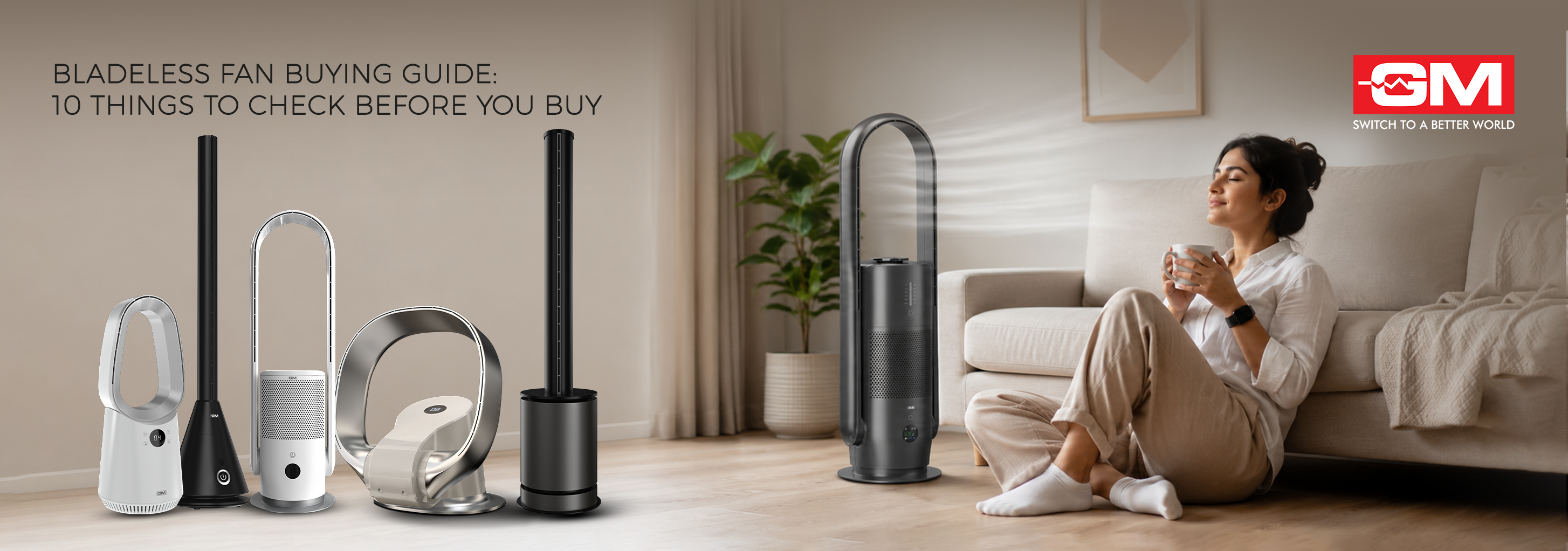
Bladeless Fan Buying Guide: 10 Checks | GM Modular
Bladeless Fan Buying Guide: 10 Things to Check Before You Buy A bladeless fan looks like the obvious upgrade. No spinning blades, a slim tower, a quiet hum, and a price that hints it must be the better choice. But the word “bladeless” on
Read More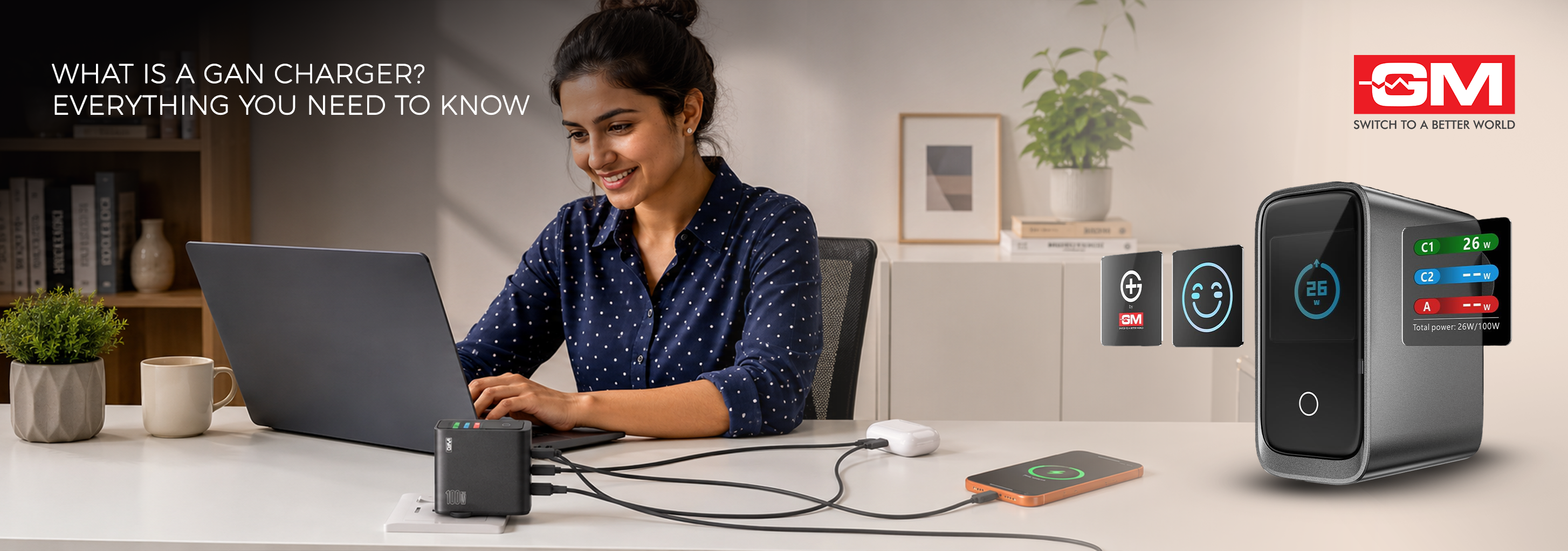
What Is a GaN Charger? A Simple Guide
What Is a GaN Charger? Everything You Need to Know You have probably used gallium nitride for years without knowing it. Before it reached the charger on your wall, this material lit up the first white LEDs, powered blue lasers, and read the discs in
Read More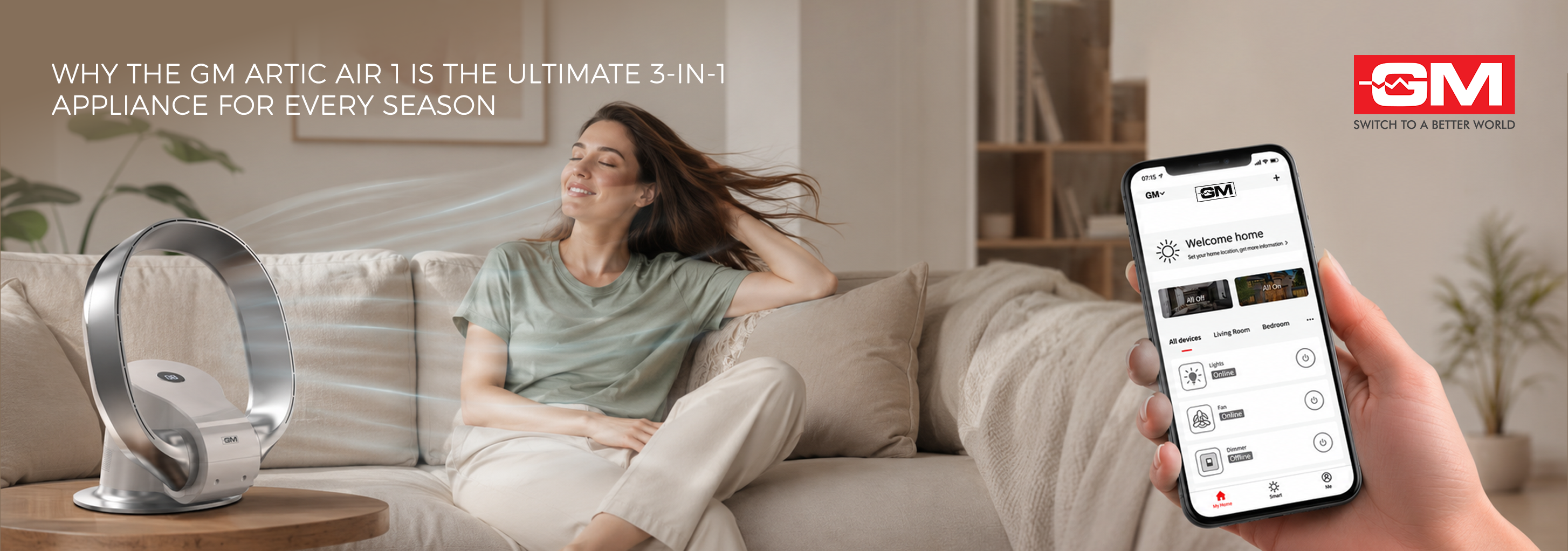
GM Artic Air 1: 3-in-1 Bladeless Tower Fan
Why the GM Artic Air 1 Is the Ultimate 3-in-1 Appliance for Every Season Picture one slim tower in the corner of your living room. In May, it cools you through a brutal afternoon. In August, it clears the damp, stale air the monsoon leaves beh
Read More
Wireless Charging vs Wired Charging: Which Is Faster?
Wireless Charging vs Wired Charging: Which Is Faster? If your phone is at 10% and you have twenty minutes before heading out, which charger should you grab: the cable or the pad? Wireless charging is everywhere now, yet most of us still reach for a
Read More