Blog
Everything You Need to Know About MCB Distribution Boards
Updated on Sep 2024
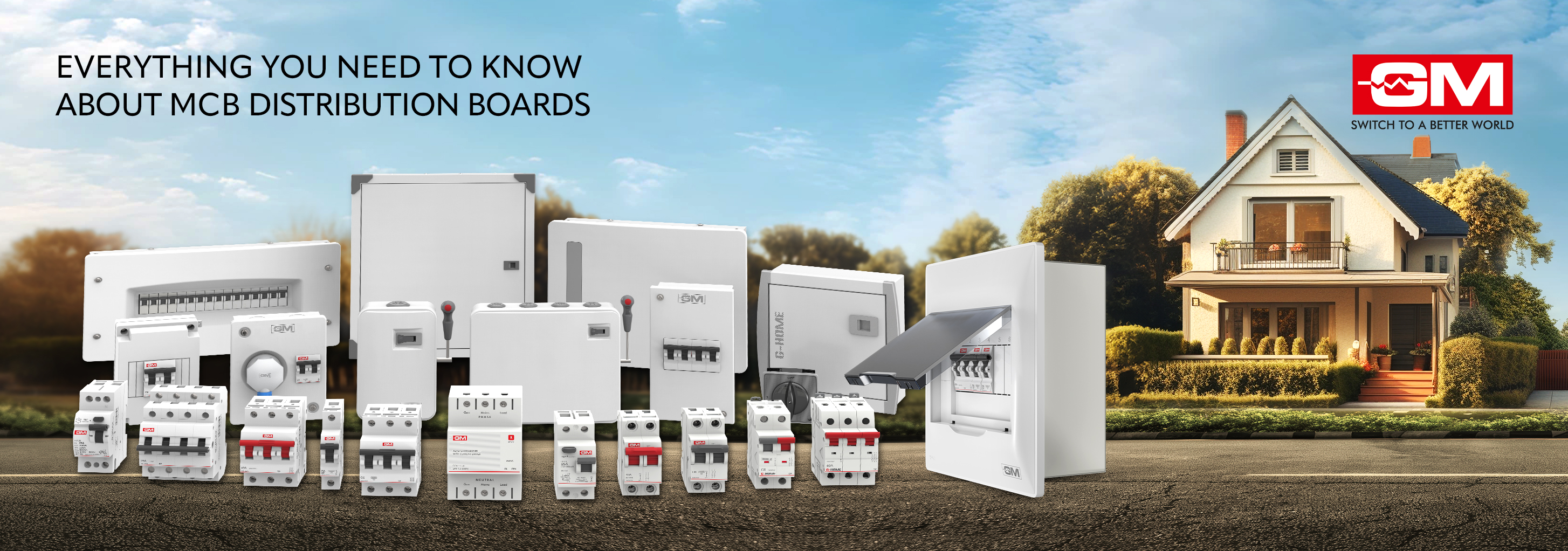
More often than not, we hear about fire hazards in establishments like restaurants, hotels, malls, and more. Residential spaces such as your home and commercial ones, including your office, are all at risk. Although there could be multiple reasons for such catastrophic events, one of the most consequential is electrical faults. This makes it crucial for you to understand its prevention.
We are not talking just about refraining from playing with electrical components like wires and switches; we are emphasising the importance of installing an MCB distribution board which is designed to help prevent unwanted electrical disasters effectively. If you are unaware of the role of an MCB distribution board in your home or office, this is the blog for you! Consider this a GM Modular guide to learn about these essential components of your home’s electrical system.
Understanding the Basics of an MCB Distribution Board
An MCB (Miniature Circuit Breaker) distribution board is an essential component of the electrical system that enables the distribution of the power supply into various circuits while also providing a circuit breaker for each circuit in a common enclosure. The MCB refers to an automatically operated electrical switch that trips during an overload or even short circuit, protecting against damage, equipment failure and electrical faults. The distribution board location is often in out-of-the-way areas or hidden spots, such as under the stairs orin the basement.
Discover Different Types of Distribution Boards
Now that you are familiar with the basics, it is time to explore the different types of distribution boards and MCB switches you can find in your space.
Distribution boards are available in various types, such as:
● Surface mounted
● Flush mounted
● Single door
● Double door
● Horizontal layout
● Vertical layout
● Covered with a door
● Covered with see-through plastic covers
These boards are often equipped with different types of MCBs, including:
● Type A: These are designed to protect against overcurrent.
● Type B: They protect against overcurrent and short circuits.
● Type C: These are designed to safeguard your system against both overcurrent and earth fault currents.
● Type D: They have a higher tripping threshold than Type C MCBs and are known to protect against overcurrent and earth fault currents.
● Type G: These MCBs protect against overcurrent and earth fault currents in residual current devices of an electrical system.
● Type H: They are designed to safeguard DC-powered electrical systems against overcurrent and earth fault currents.
● Type K: These are made to protect electrical systems with high fault levels against overcurrent and short circuits.
● Type Z: They are highly sensitive MCBs that trip when current exceeds rate load by only 2 to 3 times and are perfect for devices susceptible to short circuits.
Learn How MCB Distribution Board Works
Miniature Circuit Breakers (MCBs) respond to overcurrent when the electrical flow exceeds the designated safe levels. They feature a robust mechanism that helps minimise failures and false alarms. When excess current flows, it heats the bimetallic strip inside the MCB, causing it to bend and trip. This action separates electrical contacts to control the arc (electrical discharge), which is then cooled by an insulated metal strip called the arc chute. The MCB resets once the fault is resolved. MCBs protect against both overloads and short-circuits. Overload protection is managed by the bimetallic strip’s thermal response, while short circuit protection relies on the tripping coil's electromagnetic response. The MCB reacts quickly to high discharges, tripping within a tenth of a second, and more slowly for lower currents.
To summarise, the uses of distribution boards include protection of the electrical distribution system against damage that could occur due to short circuits, overload, earth leakage, etc. They are a must-have in your home, office and any other space you own to ensure optimum safety against dangerous situations. You can explore our collection of home protection products to make the right choice.
Related Blogs

Bladeless Fan Buying Guide: 10 Checks | GM Modular
Bladeless Fan Buying Guide: 10 Things to Check Before You Buy A bladeless fan looks like the obvious upgrade. No spinning blades, a slim tower, a quiet hum, and a price that hints it must be the better choice. But the word “bladeless” on
Read More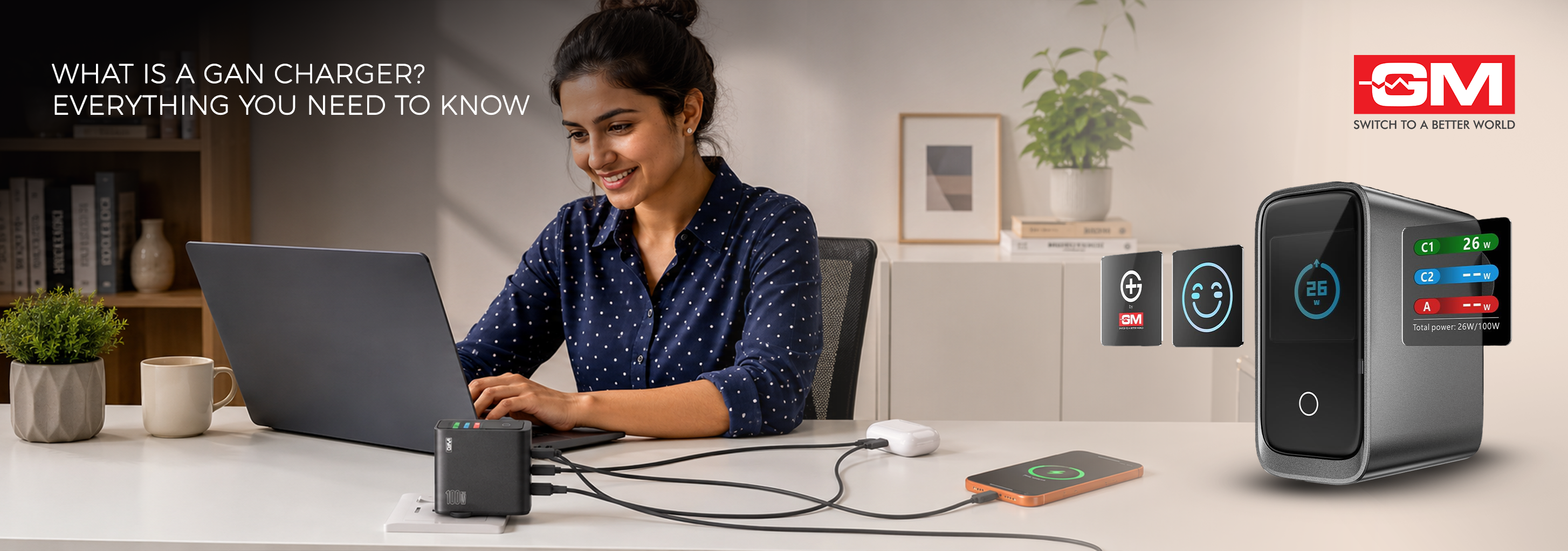
What Is a GaN Charger? A Simple Guide
What Is a GaN Charger? Everything You Need to Know You have probably used gallium nitride for years without knowing it. Before it reached the charger on your wall, this material lit up the first white LEDs, powered blue lasers, and read the discs in
Read More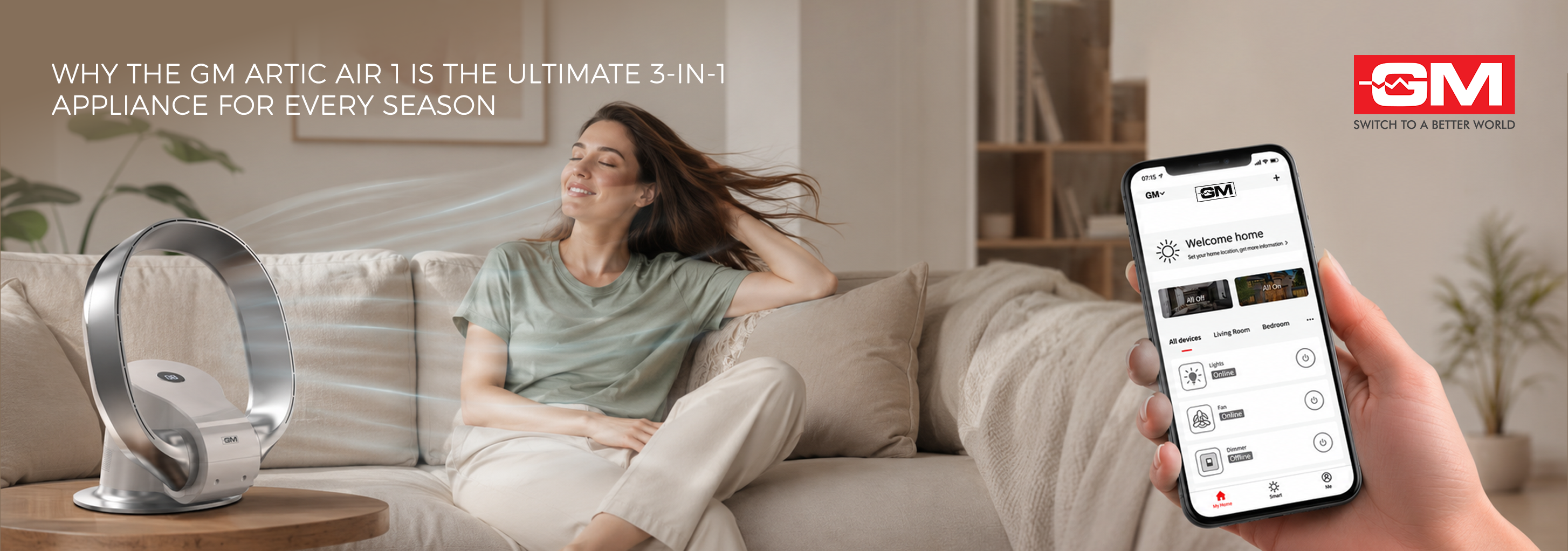
GM Artic Air 1: 3-in-1 Bladeless Tower Fan
Why the GM Artic Air 1 Is the Ultimate 3-in-1 Appliance for Every Season Picture one slim tower in the corner of your living room. In May, it cools you through a brutal afternoon. In August, it clears the damp, stale air the monsoon leaves beh
Read More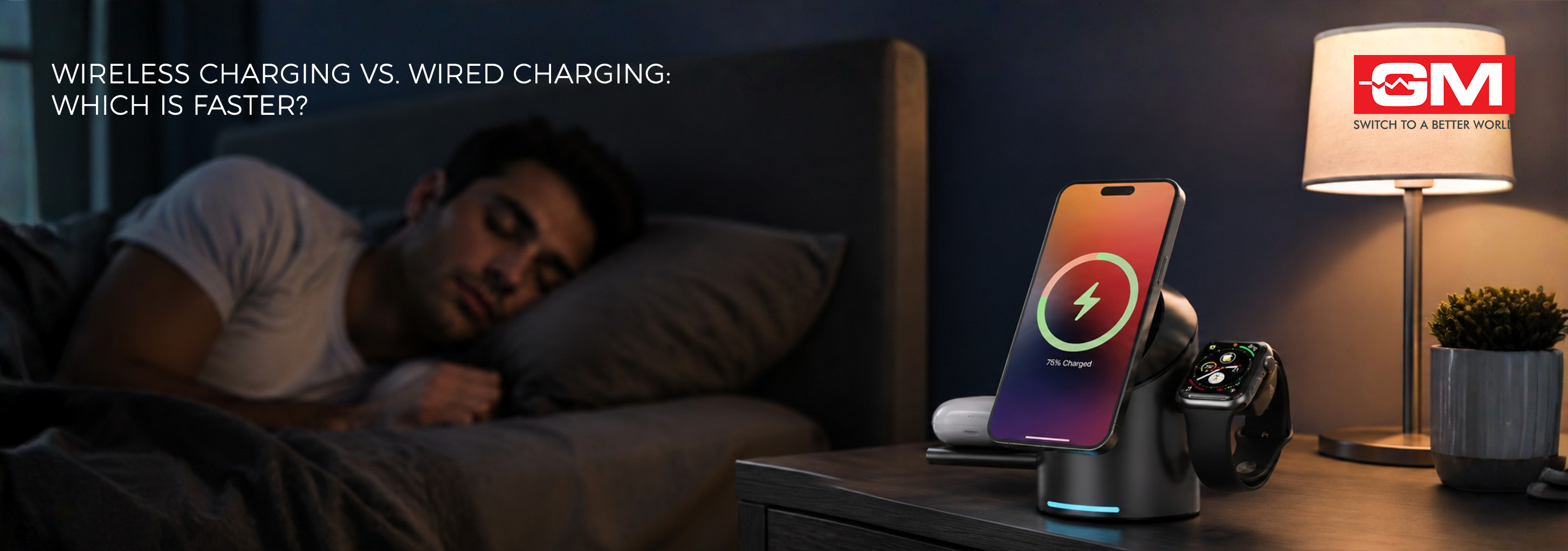
Wireless Charging vs Wired Charging: Which Is Faster?
Wireless Charging vs Wired Charging: Which Is Faster? If your phone is at 10% and you have twenty minutes before heading out, which charger should you grab: the cable or the pad? Wireless charging is everywhere now, yet most of us still reach for a
Read More