Blog
Wired vs Wireless Headphones: Which is Right For You?
Updated on Jun 2026
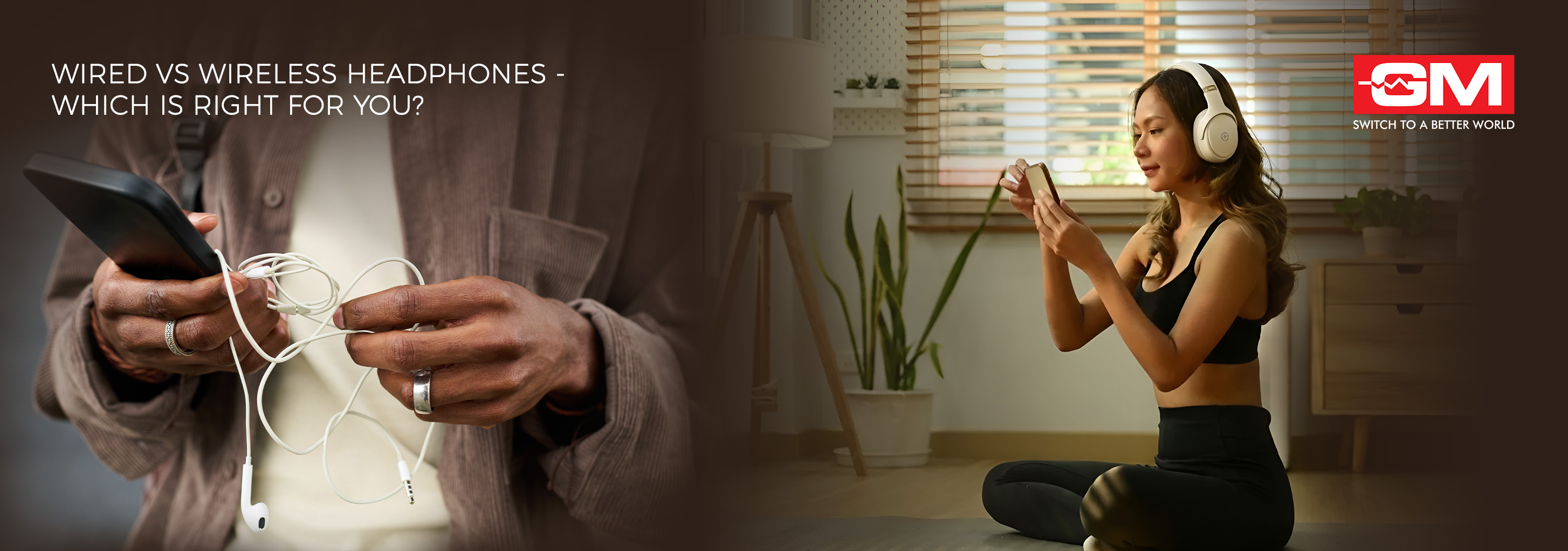
Whether you’re rushing through a crowded train platform and your wired earphones snag on someone’s bag, or you’re mid-workout when your Bluetooth buds flash a low-charge warning, the headphones you pick shape how you experience your day. Understanding what wireless headphones are and how they stack up against their corded counterparts can save you from buyer’s regret. In this guide, we break down the key differences in sound quality, portability, and convenience so you can choose with confidence.
Defining the Basics: What Are Wired and Wireless Headphones?
Before diving into which option suits your lifestyle, it’s vital to understand the fundamental mechanics behind these two formats.
So, what are wireless headphones exactly? These are audio devices that use Bluetooth technology to transmit digital audio signals from your smartphone, laptop, or tablet directly to your earpieces, without any physical cable connecting the two. They rely on an internal rechargeable battery to function.
On the other hand, what are wired headphones? These are traditional audio devices that connect to your source device through a physical cable, typically using a 3.5mm audio jack or a USB-C connector. They transmit an analogue audio signal directly, meaning they draw power from the connected device itself.
It’s worth noting that the smartphone industry has increasingly moved away from the traditional 3.5mm headphone jack. This shift has made Bluetooth audio the default choice for many listeners, pushing corded models into more specialised, professional roles.
Exploring the Pros of Wireless Headphones
The rise of Bluetooth audio is no accident. The pros of wireless headphones are genuinely compelling for anyone who values convenience in their daily routine. Here are some of the standout advantages:
-
Unrestricted mobility. You can walk around your home, exercise at the gym, or navigate a busy street without worrying about a cable snagging on objects or limiting your reach.
-
No tangled cables. Let’s be honest: no one enjoys untangling knotted wires at 8 AM. Bluetooth eliminates that frustration.
-
Smart features built in. Many modern models come equipped with Active Noise Cancellation (ANC), which reduces background noise, along with intuitive touch controls for adjusting volume and skipping tracks.
-
Seamless multi-device pairing. You can switch your connection between your phone and laptop quickly, making them ideal for people who juggle multiple gadgets throughout the day.
-
Lightweight, portable design. Most Bluetooth earbuds come with compact charging cases that slip easily into a pocket or bag, making them ideal travel companions.
If portability ranks high on your list, look for earbuds with long playback, a secure fit, and a compact case. GM Modular Wireless Earbuds tick all three boxes with a sleek, ergonomic form factor designed for all-day comfort.
Understanding the Cons of Wireless Headphones
While the mobility is highly appealing, it’s equally important to acknowledge the minor limitations of this technology. Here are the primary cons of wireless headphones to keep in mind:
-
Charging dependence. Most wireless earbuds offer roughly 4 to 8 hours of playback per charge. If your charge runs out mid-commute, you’re left in silence until you can plug them in.
-
Audio latency. Audio latency (the slight delay between a signal being sent and it reaching your ears) can be a minor issue for competitive gamers or video editors who need perfectly synchronised sound.
-
Slight audio compression. Bluetooth transmits audio using a codec (a software programme that compresses data for wireless transmission). Modern codecs like AAC and LDAC have narrowed the gap significantly, but there’s still a marginal loss in detail compared to a wired connection. For the average listener, this is rarely noticeable.
-
Higher initial cost. Quality Bluetooth models with advanced features typically carry a higher price tag than their corded equivalents.
If charge anxiety is your biggest concern, GM Modular Bluetooth Headphones focus on extended playback with robust, long-lasting performance to keep up with your day.
Also Read: How to Choose the Best Speakers for Your Home Audio Setup
The Final Verdict on Wired vs Wireless Headphones
The wired vs wireless headphones debate doesn’t have a single correct answer; it depends entirely on your priorities.
Choose Wired If:
-
You edit videos or game competitively and need zero latency
-
You never want to worry about charging your headphones
-
You prioritise raw, uncompressed audio fidelity
Choose Wireless If:
-
You commute daily and want hassle-free listening
-
You work out regularly and need a cable-free fit
-
You value smart features like ANC and multi-device pairing
Put simply: wired headphones sound better; wireless headphones fit your life better. For most daily listeners, that makes wireless the smarter pick.
Also Read: 5 Important Things to Consider Before Buying a Bluetooth Speaker
Essential Hearing and Electrical Safety Guidelines
Your listening experience should always be a safe one. Here are some important precautions to follow:
-
Always listen at safe volume levels (generally below 85 decibels) to help prevent potential hearing damage or tinnitus over prolonged use.
-
Use only certified, high-quality charging cables and adapters to recharge your Bluetooth devices safely.
-
Avoid charging your audio equipment near water or leaving it plugged in overnight to help prevent cell degradation and overheating.
Always ensure products are used according to manufacturer guidelines and local electrical safety codes.
The right headphones don’t just play music; they remove friction from your day. Whether you value uncompromising analogue sound or the convenience of going wireless, the choice comes down to how you live. For most daily listeners, modern Bluetooth delivers the ideal blend of quality and portability. GM Modular offers a premium range of sleek, high-performance audio accessories designed to fit seamlessly into your routine. Explore the full collection at GM Modular and upgrade to a listening experience that actually keeps up with your day.
Frequently Asked Questions
1. Exactly what are wireless headphones, and how do they work?
These devices use radio frequency, most commonly Bluetooth, to transmit digital audio signals wirelessly from your smartphone or computer directly to your earpieces without needing a physical cable.
2. What are wired headphones best used for?
Corded models are ideal for competitive gaming, professional music production, and audiophile listening, as they offer zero latency and transmit uncompressed analogue sound directly.
3. What are the main pros of wireless headphones?
The biggest advantages include total wireless freedom, no tangled cables, and advanced smart features like Active Noise Cancellation and multi-device pairing for effortless daily convenience.
4. Are there any major cons of wireless headphones?
The primary drawbacks are the requirement for regular charging, potential minor audio latency during gaming, and a marginally higher initial purchase price compared to corded models.
5. In the wired vs wireless headphones debate, which option lasts longer?
Corded models generally have a longer physical lifespan because they don’t rely on internal lithium-ion batteries that naturally degrade over several years of use.
Related Blogs
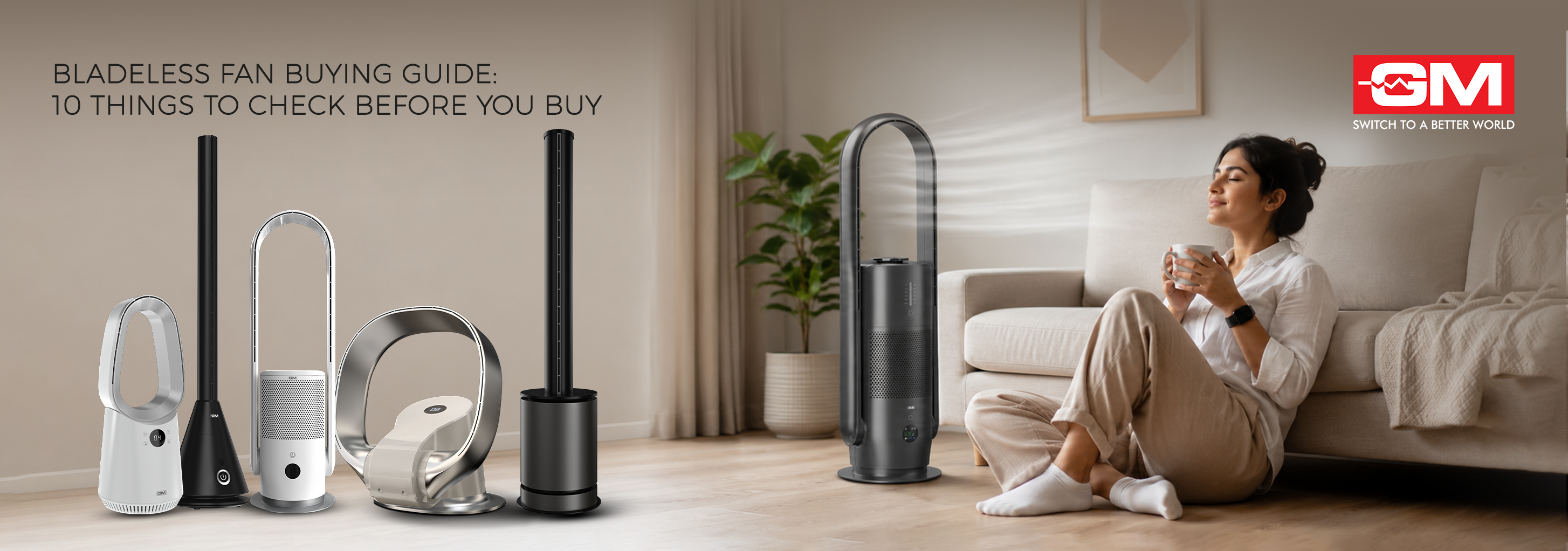
Bladeless Fan Buying Guide: 10 Checks | GM Modular
Bladeless Fan Buying Guide: 10 Things to Check Before You Buy A bladeless fan looks like the obvious upgrade. No spinning blades, a slim tower, a quiet hum, and a price that hints it must be the better choice. But the word “bladeless” on
Read More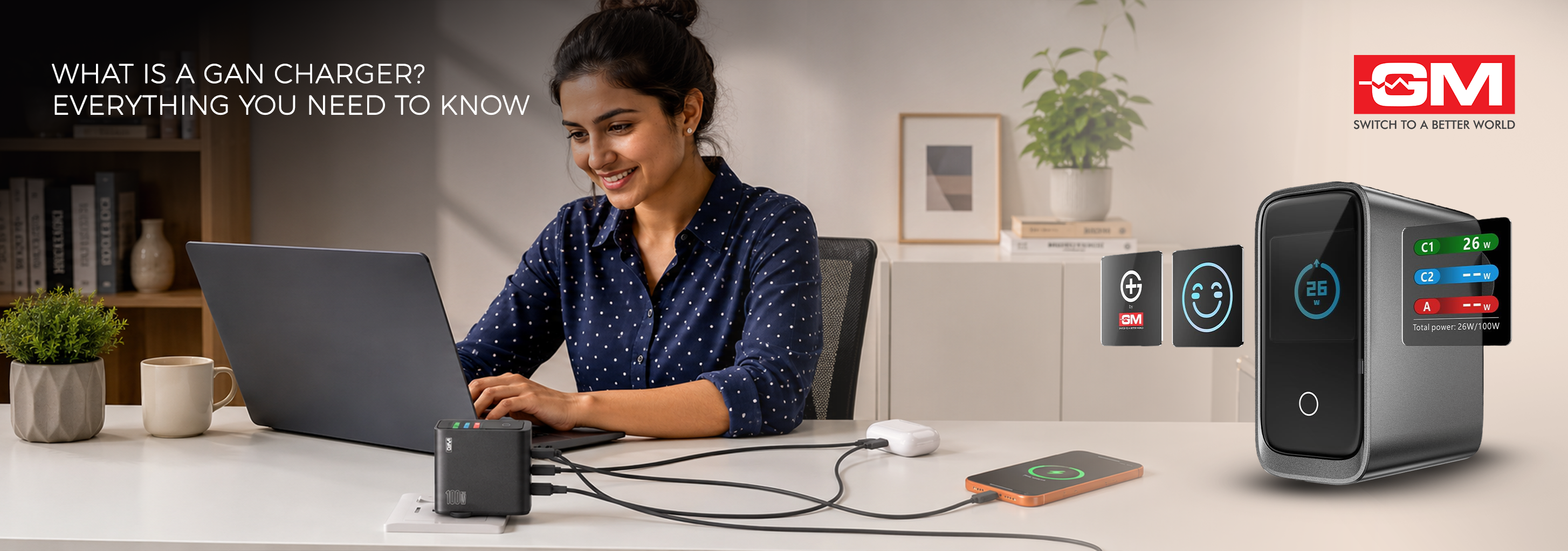
What Is a GaN Charger? A Simple Guide
What Is a GaN Charger? Everything You Need to Know You have probably used gallium nitride for years without knowing it. Before it reached the charger on your wall, this material lit up the first white LEDs, powered blue lasers, and read the discs in
Read More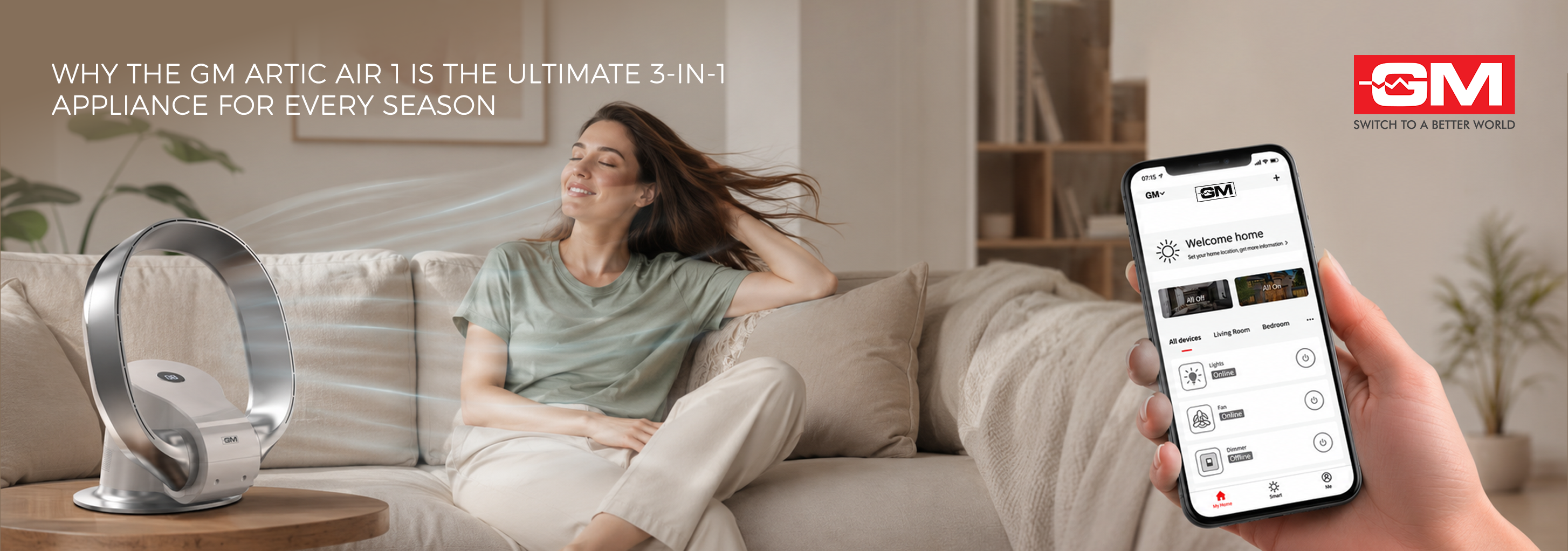
GM Artic Air 1: 3-in-1 Bladeless Tower Fan
Why the GM Artic Air 1 Is the Ultimate 3-in-1 Appliance for Every Season Picture one slim tower in the corner of your living room. In May, it cools you through a brutal afternoon. In August, it clears the damp, stale air the monsoon leaves beh
Read More
Wireless Charging vs Wired Charging: Which Is Faster?
Wireless Charging vs Wired Charging: Which Is Faster? If your phone is at 10% and you have twenty minutes before heading out, which charger should you grab: the cable or the pad? Wireless charging is everywhere now, yet most of us still reach for a
Read More