Blog
Which Ceiling Fan Type is Best for Small vs Large Rooms in India?
Updated on Jun 2026

Struggling to find the perfect ceiling fan for your space? The wrong size means a weak breeze in a big hall, a storm in a tiny bedroom, or waking up sweaty at 2 AM because air never reaches your side. Before you buy ceiling fans, use one formula: match sweep size to room area, then pick the motor that fits your budget.
Quick Ceiling Fan Selection Formula
The fastest way to narrow down your choice:
-
Up to 75 sq. ft. (kitchens, study rooms): 600 mm to 900 mm sweep
-
75 to 120 sq. ft. (standard bedrooms): 1050 mm to 1200 mm sweep
-
120 to 200 sq. ft. (master bedrooms, medium halls): 1200 mm with 220+ CMM air delivery
-
Above 200 sq. ft. (large halls): 1400 mm sweep, or two 1200 mm fans
Best all-round choice: If you are unsure, a 1200 mm BLDC fan with 220+ CMM suits most Indian bedrooms and is the safest default pick.
Understanding Different Ceiling Fan Types
The Indian market has shifted from traditional induction motors towards smart, energy-efficient technology, so understanding the ceiling fan type options matters before you buy.
-
BLDC Fans: BLDC (Brushless Direct Current) motors use electronic commutation, delivering quieter operation and up to 50% energy savings.
-
High-Speed Fans: Focused on maximum RPM (Revolutions Per Minute) for a strong, direct breeze.
-
Decorative Fans: Built around premium aesthetics, often with integrated under-lighting.
-
Compact Sweep Fans: Smaller models for kitchens and study rooms.
GM Modular offers all four variants, so you can match the right ceiling fan type to every room.
Also Read: Here's How BLDC Fans Can Help Lower Your Utility Bills
Which Type of Ceiling Fan is Best for Small Rooms?
Small rooms need gentle, consistent airflow. A larger sweep creates excessive draught, and low-noise operation matters because sound bounces off enclosed walls. The table below answers which type of ceiling fan is best for compact interiors, helping you shortlist the best ceiling fans for your space.
GM Modular’s compact sweep fans combine whisper-quiet motors with aerodynamic blades, delivering balanced cooling without overwhelming a cosy room.
Choosing the Best High Speed Ceiling Fan for Large Rooms
Large rooms over 100 sq. ft. need serious airflow, typically 1200 mm or 1400 mm sweep size. When shopping for a high-speed ceiling fan, RPM tells only half the story.
Key factors to prioritise:
-
Sweep Size: 1200 mm or 1400 mm for rooms above 100 sq. ft.
-
Air Delivery: 220 CMM (Cubic Metres per Minute) or higher for full-room circulation.
-
Motor: BLDC delivers strong airflow with lower consumption.
-
Blades: Aerodynamic designs optimise airflow.
Pro Tip: If your living room has a “dead corner” where air never reaches, or your hall is rectangular, one fan cannot cover it. Two 1200 mm fans end-to-end often work better than one oversized 1400 mm unit. GM Modular’s Excel35 BLDC High-Speed range with 100% copper winding is among the best ceiling fans for spacious Indian homes.
How Much Can You Really Save with a BLDC Fan?
“Up to 50% energy savings” is the headline. Here is what it means on your bill:
Actual savings may vary based on usage and electricity rates.
When a BLDC fan may not be worth it: For guest rooms, storage areas, or rarely-used spaces, a standard fan can be more cost-effective upfront. BLDC pays back fastest in rooms used 5+ hours daily.
Common Mistakes to Avoid When Buying a Ceiling Fan
-
Choosing by RPM alone: Check CMM first for full-room cooling.
-
Ignoring room size: A 1400 mm fan in a 100 sq. ft. bedroom feels stormy; a 900 mm fan in a 200 sq. ft. hall feels useless.
-
Using one fan for large halls: Long or rectangular rooms need two fans.
-
Skipping the BEE rating: A fan without a BEE (Bureau of Energy Efficiency) rating can cost ₹1,500+ extra yearly.
-
Overlooking ceiling height: Below 9 feet, use a shorter downrod; above 11 feet, use a longer one.
Tips to Buy Ceiling Fans Online (Top-Rated Ceiling Fans)
Use this checklist when buying ceiling fans online to pick the top-rated ceiling fans:
-
Verify the BEE Star Rating for long-term energy savings.
-
Check for anti-dust coatings to reduce maintenance.
-
Look for smart features like app connectivity and remote controls.
-
Confirm warranty and service network for reliable after-sales support.
The GM Modular online store lets you view complete specifications and expert guidance in one place.
Installation and Electrical Safety
Always isolate the mains power supply before any installation or cleaning. Ensure the ceiling hook and downrod are rated for the fan’s weight and high-speed torque. We strongly recommend professional installation by a certified electrician to prevent wobbling and ensure secure fittings.
Frequently Asked Questions
1. Exactly which type of ceiling fan is best for a standard 120 sq. ft. bedroom?
A 1200 mm (48-inch) BLDC fan with 220+ CMM works best at typical ceiling heights of 9 to 10 feet.
2. What is the main ceiling fan type recommended to save electricity?
BLDC (Brushless Direct Current) models are the most energy-efficient, consuming up to 50% less power and saving roughly ₹1,200-1,500 per fan each year.
3. Does a high-speed ceiling fan guarantee better cooling?
Not always. High RPM gives a strong breeze below, but CMM combined with aerodynamic blades ensures cooling reaches every corner.
4. Can I safely buy ceiling fans online without seeing them in person?
Yes, if you buy from trusted brands like GM Modular. Check the sweep size, motor type, BEE rating, and warranty before ordering.
5. How do I maintain top-rated ceiling fans to ensure longevity?
Clean the blades regularly with a dry cloth. A qualified electrician should inspect the canopy, down rod, and wiring once a year.
Before buying your next ceiling fan, check just two things: your room size and the fan’s CMM (Cubic Metres per Minute). Get those right, and you will never deal with poor cooling again. Explore GM Modular’s BLDC (Brushless Direct Current) and high-speed fans online to find the exact match for every room.
Related Blogs
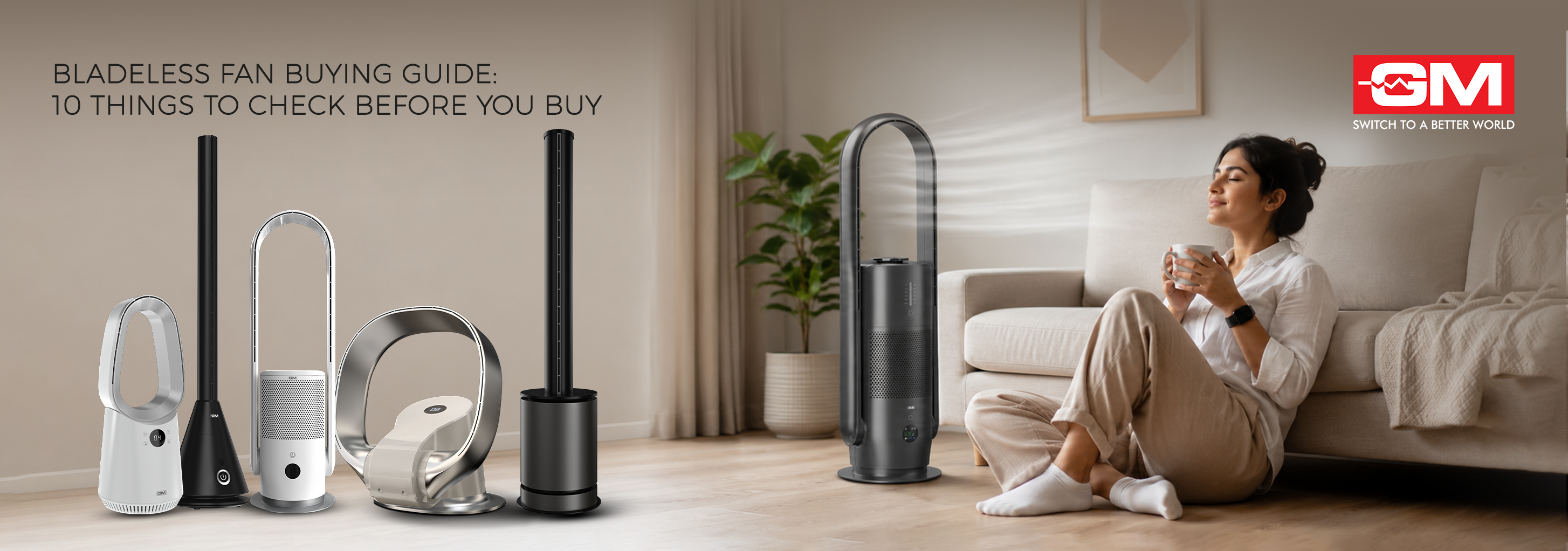
Bladeless Fan Buying Guide: 10 Checks | GM Modular
Bladeless Fan Buying Guide: 10 Things to Check Before You Buy A bladeless fan looks like the obvious upgrade. No spinning blades, a slim tower, a quiet hum, and a price that hints it must be the better choice. But the word “bladeless” on
Read More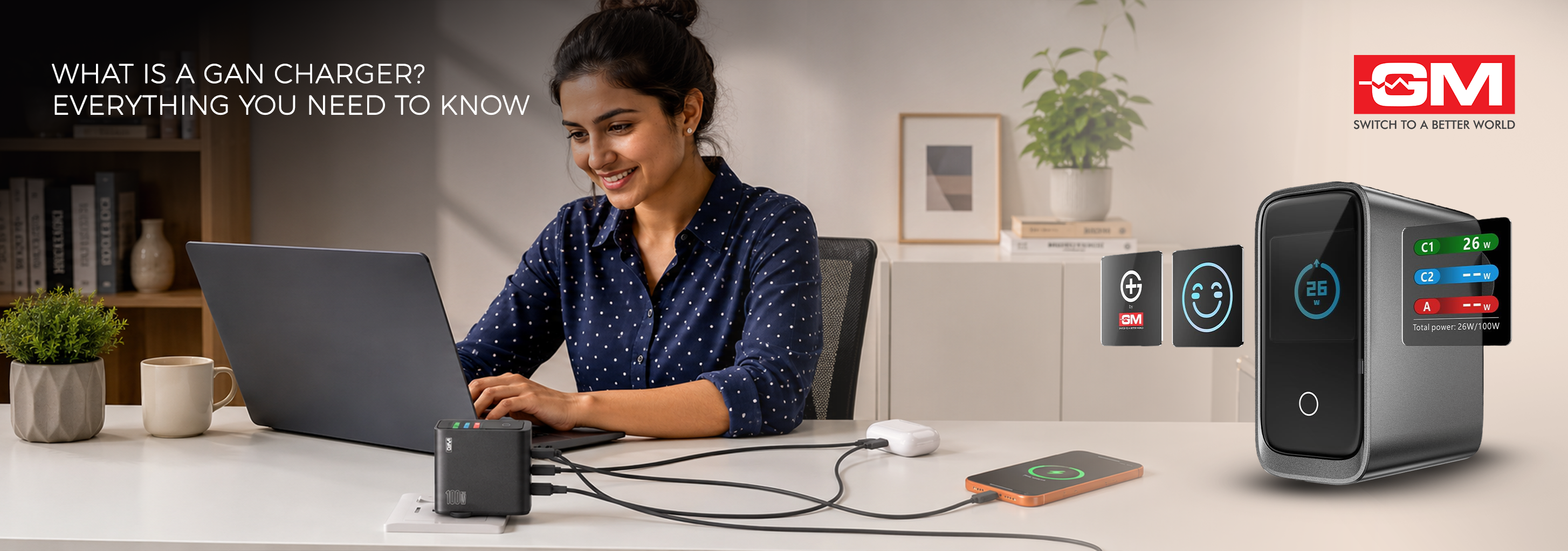
What Is a GaN Charger? A Simple Guide
What Is a GaN Charger? Everything You Need to Know You have probably used gallium nitride for years without knowing it. Before it reached the charger on your wall, this material lit up the first white LEDs, powered blue lasers, and read the discs in
Read More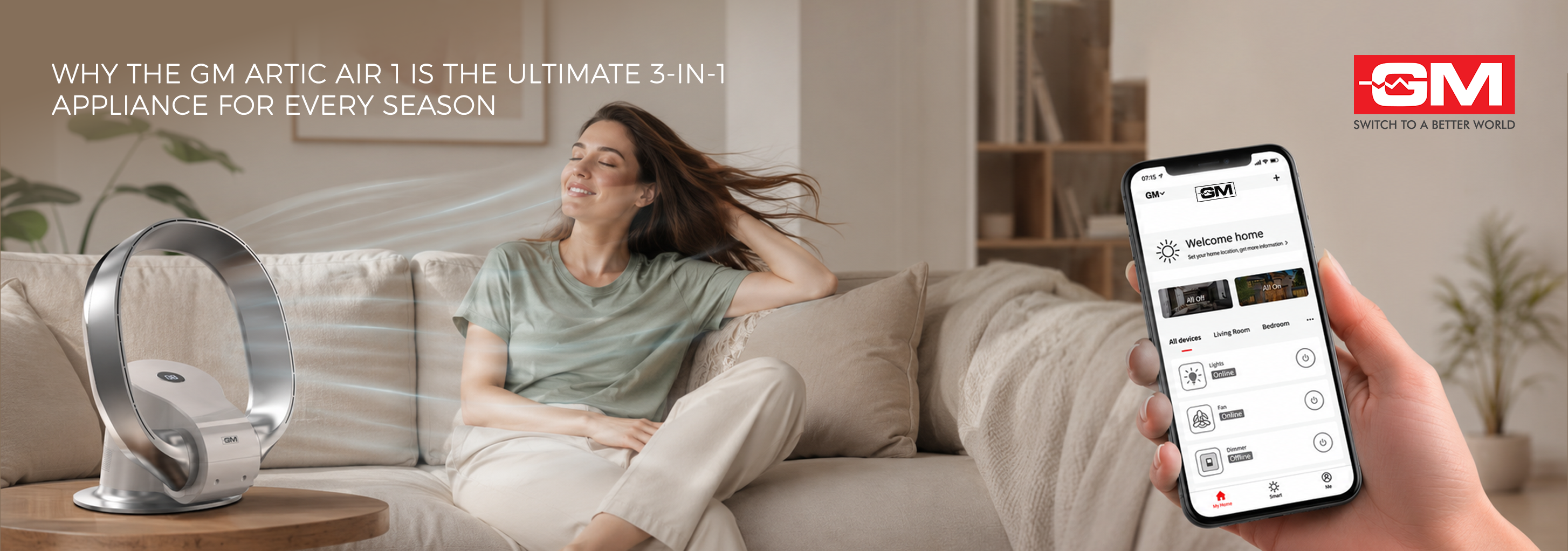
GM Artic Air 1: 3-in-1 Bladeless Tower Fan
Why the GM Artic Air 1 Is the Ultimate 3-in-1 Appliance for Every Season Picture one slim tower in the corner of your living room. In May, it cools you through a brutal afternoon. In August, it clears the damp, stale air the monsoon leaves beh
Read More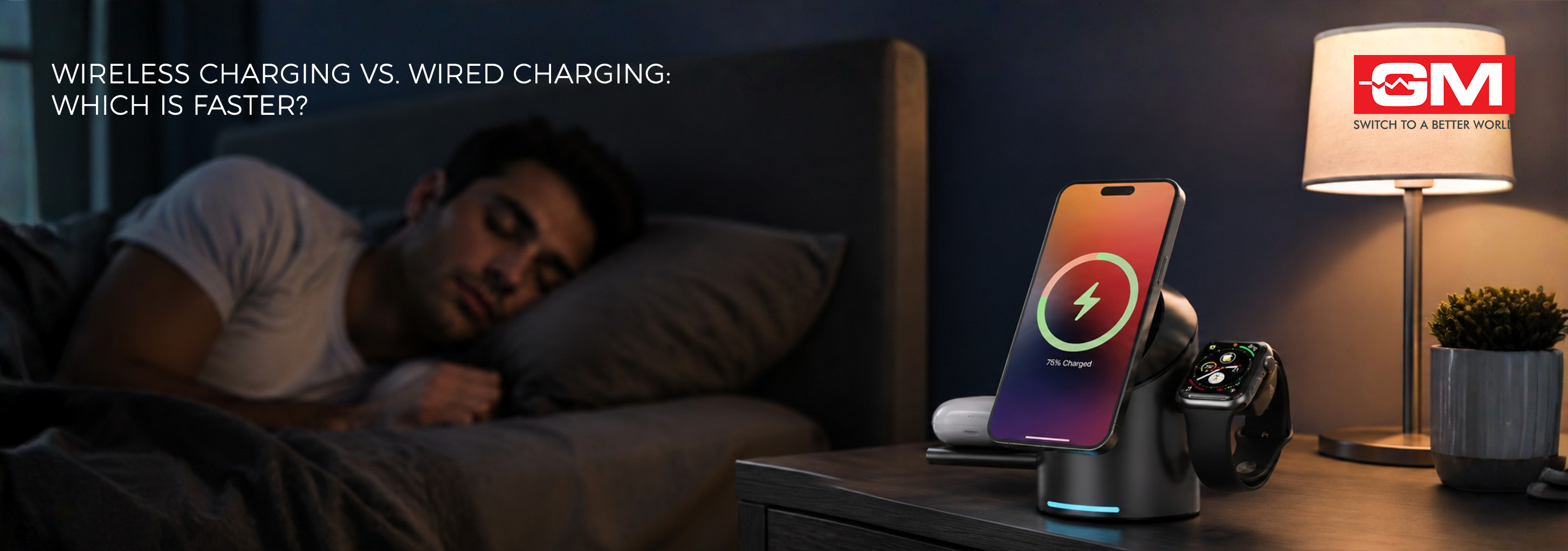
Wireless Charging vs Wired Charging: Which Is Faster?
Wireless Charging vs Wired Charging: Which Is Faster? If your phone is at 10% and you have twenty minutes before heading out, which charger should you grab: the cable or the pad? Wireless charging is everywhere now, yet most of us still reach for a
Read More