Blog
What Is a Two-Way Switch & How Does It Work?
Updated on Aug 2025
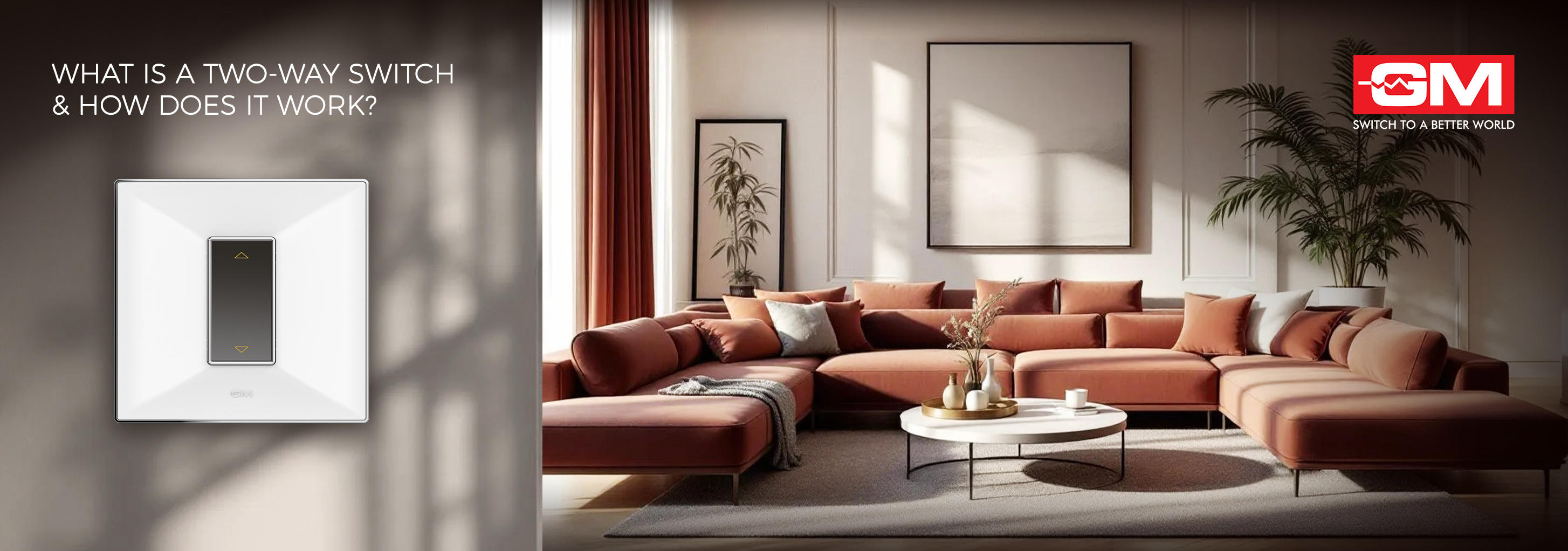
Technological advances have transformed many everyday items, including wall switches. A two-way switch, commonly used in hallways, staircases, long corridors, or large rooms with multiple entrances, lets you control a single light or device from two separate locations. Unlike a standard single switch, it provides practical and efficient control, making it essential in modern homes and buildings where convenience and easy access matter. Understanding how it works and differs from other switches can help you make smarter decisions when upgrading your electrical system.
What Is a Two-Way Switch: Basic Working Principle
To understand how a two-way switch works, think of two switches connected so that either one can turn a light on or off depending on the position of the other. The switches are wired in a parallel circuit, and each has three terminals: Common (C), L1, and L2. When you flip one switch, it changes the path of the electrical current, and depending on how both switches are aligned, the circuit either closes to turn the light on or opens to turn it off. In other words, the switches work together, and their positions control whether the light is on or
off.
What Does a Two-Way Switch Look Like?
To the average user, a two-way switch looks just like a regular switch without any flashing lights or special labels. What makes it different is how it’s wired inside the wall. Electricians can usually spot a two-way switch by the extra terminals it has compared to a one-way switch. Many brands also sell modular two-way switches with clear labels on the back to help with wiring. When shopping online or in stores, you’ll often see “Two-Way” mentioned on the packaging or product description.
Thinking of upgrading? Here are 6 reasons to choose touch switches over traditional ones.
Two-Way Switch vs One-Way Switch: What’s the Difference?
A one-way switch controls a device from a single location and has two terminals, input and output, making it ideal for regular rooms or areas with one entrance. In contrast, a two-way switch controls the same device from two different locations and features three terminals, common, L1, and L2, making it perfect for staircases, hallways, or rooms with two entrances. Although they may look similar on the outside, their functions are very different. So when someone asks, “What is a two-way switch?” think of it as a smart control solution rather than
just a simple button.
Applications of Two-Way Switches
They enhance both convenience and energy efficiency by allowing users to control lighting more smartly. Two-way switches are commonly found in staircases with switches at both the bottom and top, long corridors, master bedrooms with dual entrances, living rooms with multiple access points, and commercial buildings or office spaces.
Why Should You Use a Two-Way Switch?
Two-way switches are not just a functional upgrade; they are a lifestyle enhancement. If you’re still wondering whether you need one, here’s why two-way switches are becoming standard in modern electrical planning. They offer convenience by allowing you to turn lights on or off without backtracking. They improve accessibility, which is especially helpful for children, elders, or people with mobility issues. They enhance safety by reducing the chances of walking in the dark, and they promote energy saving by encouraging timely switching off of lights from wherever you are.
Installation Notes (For Awareness)
While installation should always be done by a licensed electrician, it’s helpful to know that two-way switches require more wiring than standard one-way switches. A traveller wire connects the two switches and both must be properly configured to ensure smooth operation. If you’re renovating or building a new space, it’s worth discussing this option with your contractor. So, what is a two-way switch? It is a simple but often overlooked innovation that makes daily life easier. Whether it eliminates the awkwardness of fumbling in the dark or
gives you more flexible control over lighting, it adds real convenience. If you’re planning a smart, functional space, whether at home or in the office, consider where a two-way switch could add value. It is a small change that offers great ease.
Explore our guide on the different types of electrical switches to find what suits your space best.
Frequently Asked Questions
1. Can I convert a one-way switch setup into a two-way switch?
Yes, but it requires additional wiring and should be handled by a professional electrician.
2. Is a two-way switch compatible with smart home systems?
Many modern two-way switches are compatible with smart systems, especially modular or Wi-Fi-enabled versions.
3. Are two-way switches more expensive than one-way switches?
They are slightly more expensive due to added components and wiring, but the price difference is usually minimal compared to the convenience offered.
4. Can I use a two-way switch like a one-way switch?
Yes, if only one switch is wired and the others are left unused, it behaves like a one-way switch.
Related Blogs

Bladeless Fan Buying Guide: 10 Checks | GM Modular
Bladeless Fan Buying Guide: 10 Things to Check Before You Buy A bladeless fan looks like the obvious upgrade. No spinning blades, a slim tower, a quiet hum, and a price that hints it must be the better choice. But the word “bladeless” on
Read More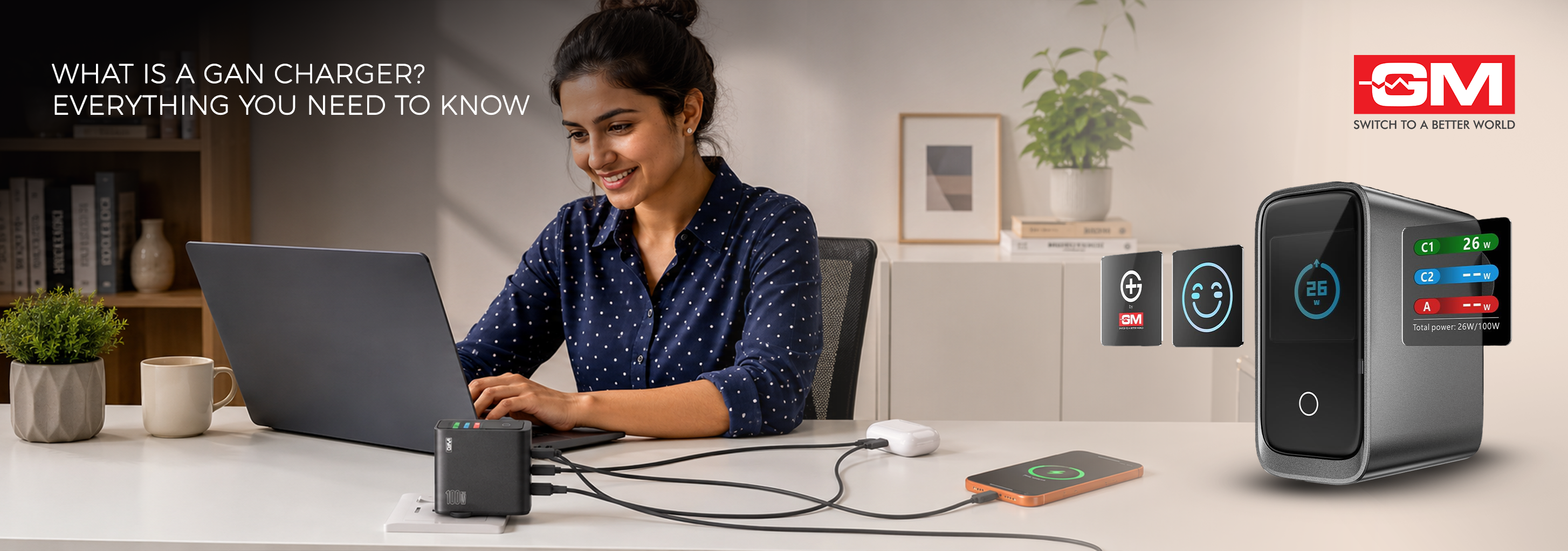
What Is a GaN Charger? A Simple Guide
What Is a GaN Charger? Everything You Need to Know You have probably used gallium nitride for years without knowing it. Before it reached the charger on your wall, this material lit up the first white LEDs, powered blue lasers, and read the discs in
Read More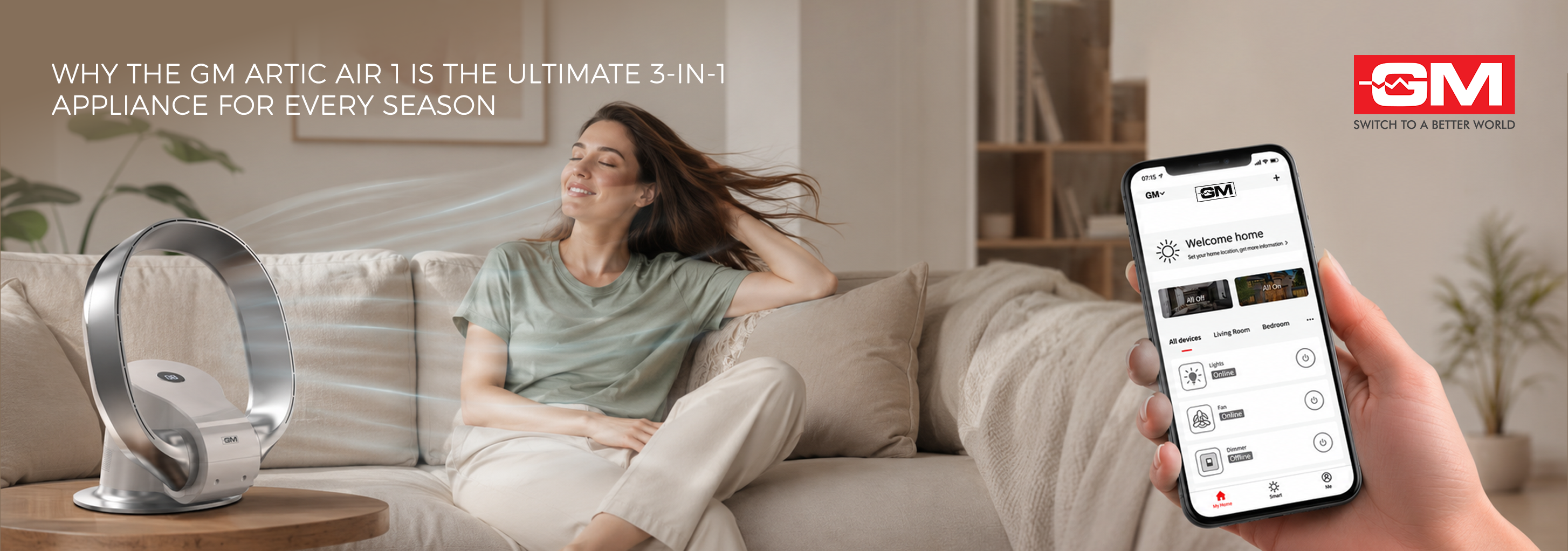
GM Artic Air 1: 3-in-1 Bladeless Tower Fan
Why the GM Artic Air 1 Is the Ultimate 3-in-1 Appliance for Every Season Picture one slim tower in the corner of your living room. In May, it cools you through a brutal afternoon. In August, it clears the damp, stale air the monsoon leaves beh
Read More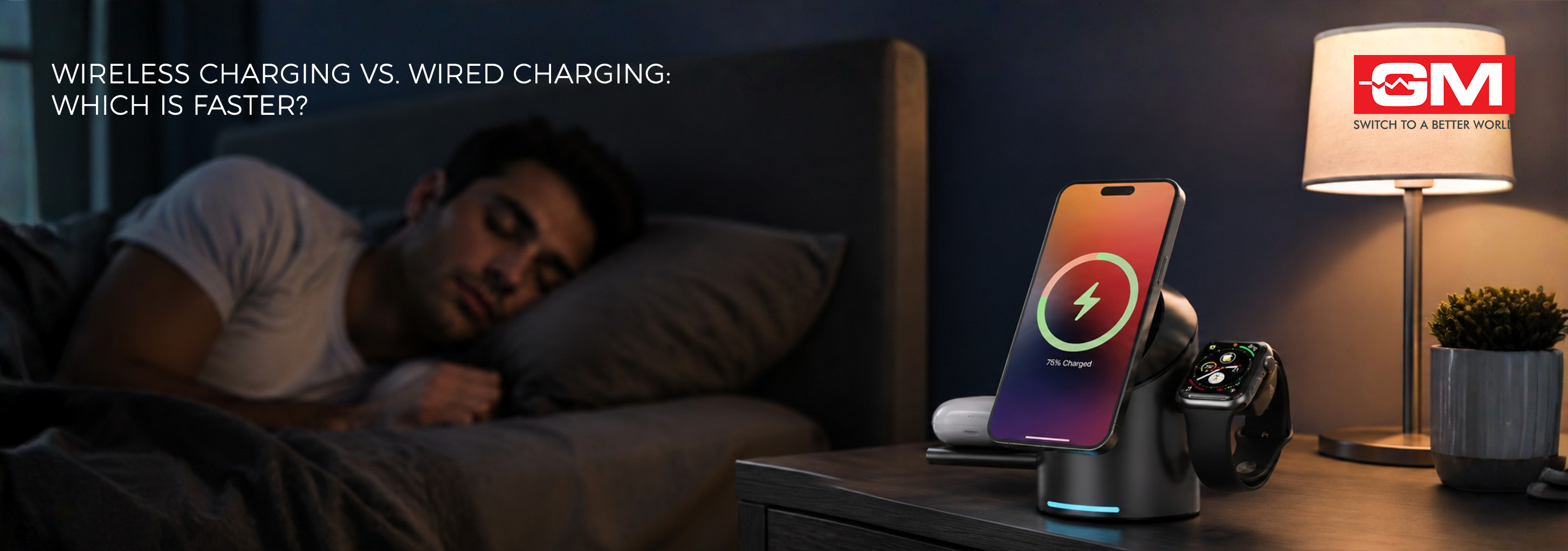
Wireless Charging vs Wired Charging: Which Is Faster?
Wireless Charging vs Wired Charging: Which Is Faster? If your phone is at 10% and you have twenty minutes before heading out, which charger should you grab: the cable or the pad? Wireless charging is everywhere now, yet most of us still reach for a
Read More