Blog
LED Bulb Wattage: How Much Power does LED Bulb Consume?
Updated on Mar 2026
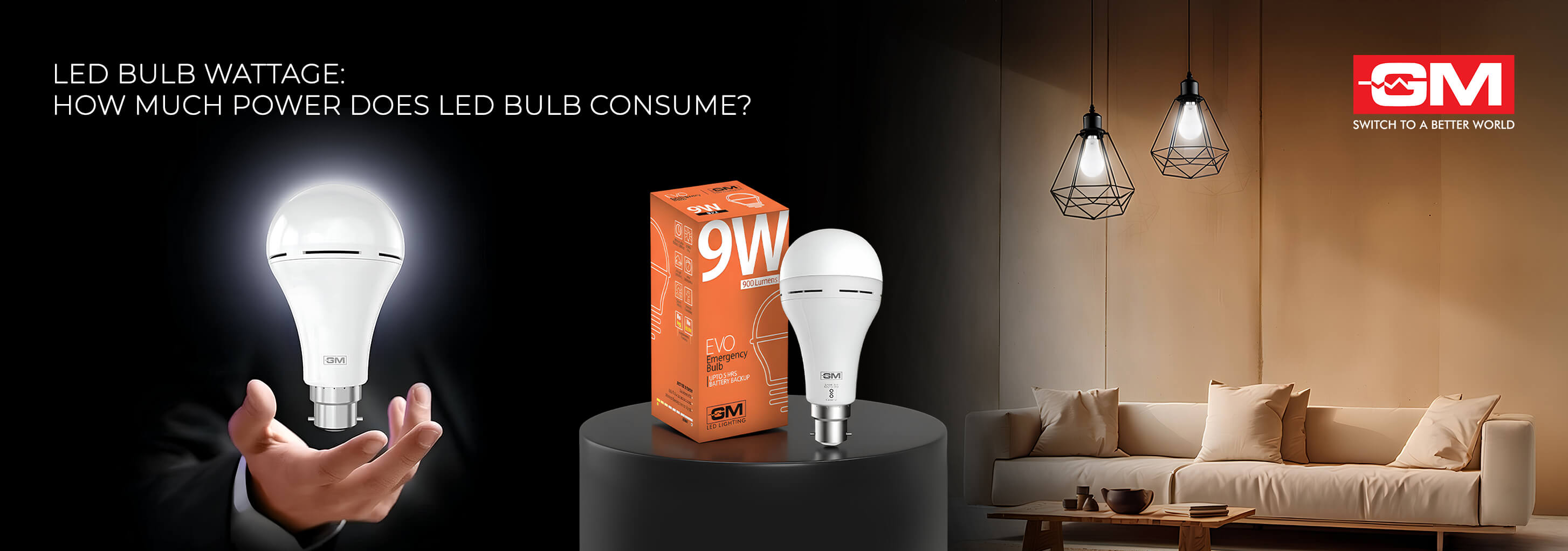
Did you know that with traditional incandescent bulbs, you pay primarily for heat, not light? Understanding LED bulb wattage is the key to slashing your electricity bills while enjoying brighter, more comfortable illumination. If you have ever felt confused by wattage labels or wondered why your old 60W bulb seems dimmer than a modern 9W LED, you are not alone. This guide will demystify wattage, explain exactly how much power LEDs consume, and help you make smarter lighting choices for your home.
Understanding Wattage: It is Not Brightness
One of the most common misconceptions about lighting is that higher wattage means brighter light. In reality, wattage measures only the energy a bulb consumes, not the amount of light it produces.
The metric that actually indicates brightness is lumens. When shopping for bulbs today, you should focus on lumens for brightness and watts for energy consumption. For instance, both a 60W incandescent and a 9W LED can produce approximately 800 lumens, but the LED light bulb's wattage is significantly lower.
This efficiency difference is measured by "luminous efficacy" (lumens per watt). Modern LEDs achieve 80–100 lumens per watt, while incandescent bulbs manage only 10–17 lumens per watt.
Key Takeaway: Stop reading watts for brightness. Check lumens instead, then compare wattage for efficiency.
Comparison: LED vs. Incandescent vs. CFL
To truly appreciate the efficiency of modern lighting, let us examine how different bulb wattage requirements compare across technologies when producing the same brightness levels.
| Brightness (Lumens) | Incandescent Wattage | CFL Wattage | LED Wattage |
| 450 (Standard) | 40W | 9–11W | 5–7W |
| 800 (Standard) | 60W | 13–15W | 9–10W |
| 1100 (Bright) | 75W | 18–20W | 11–12W |
| 1600 (Very Bright) | 100W | 23–25W | 15–18W |
The numbers reveal a striking difference. LED bulbs use approximately 85% less power than incandescent bulbs to produce identical brightness. This dramatic reduction in led light bulb wattage translates directly to lower electricity bills. For example, replacing a single 60W incandescent with a 9W LED saves 51W per hour of use.
CFL bulbs represented an improvement over incandescents, reducing consumption by roughly 70%. However, they contain small amounts of mercury, require proper disposal, and take time to reach full brightness. LEDs surpass CFLs in every practical measure while being completely mercury-free.
Key Takeaway: LEDs deliver the same brightness as incandescents while using only 15% of the power and producing far less heat.
How Much Power Does an LED Bulb Actually Consume?
Understanding real-world consumption helps you calculate potential savings. Let us examine a typical household scenario to illustrate the impact of LED bulb wattage on your electricity bill.
Consider a home with 10 light fixtures, each used for 5 hours daily:
-
With 60W incandescent bulbs: 10 bulbs × 60W × 5 hours = 3,000 Wh (3 kWh) per day
-
With 9W LED bulbs: 10 bulbs × 9W × 5 hours = 450 Wh (0.45 kWh) per day
This represents a daily saving of 2.55 kWh. At average Indian electricity rates, this can translate to savings of ₹500–700 per month, depending on your tariff structure. Over a year, the savings become substantial. Even if a quality LED costs ₹150–250, it typically pays for itself within 3–4 months through electricity savings alone.
Beyond bill reduction, switching to LEDs means less heat generation (reducing AC load in summer), fewer bulb replacements over the years, and better performance during voltage fluctuations common in Indian homes.
Also Read: Types of LED Lights You Should Know Before Buying
Choosing the Right Wattage for Every Room
Different spaces in your home have varying lighting requirements. Selecting the appropriate bulb wattage ensures optimal visibility and ambience while maintaining energy efficiency.
-
Living Room: 9–12W LED bulbs work well for ambient lighting. Combine with dimmer switches for versatility during different activities.
-
Bedroom: 7–9W LED bulbs provide softer, relaxing illumination suitable for unwinding. Warmer colour temperatures (2700K–3000K) enhance comfort.
-
Kitchen and Study Area: 12–15W LED bulbs deliver the task-appropriate brightness needed for cooking and reading. Look for higher lumen output in these spaces.
-
Outdoor Areas and Garage: For larger spaces requiring the highest LED bulb wattage options, consider 20–50W high-power GM bulb variants like hammer or rocket bulbs.
When replacing bulbs, always ensure the switch is off before changing. Additionally, verify that the LED wattage does not exceed your fixture's maximum rating, though most LED bulbs draw far less power than traditional options, making them compatible with virtually any fixture.
Quick LED Buying Guide for Indian Homes
| Replacing This | Buy This LED | Ideal For |
| 40W incandescent | 5–7W (~450 lumens) | Corridors, bathrooms |
| 60W incandescent | 9–10W (~800 lumens) | Bedrooms, living rooms |
| 100W incandescent | 15–18W (~1600 lumens) | Kitchens, study areas |
| High-power needs | 20–50W | Garages, outdoor, large halls |
Pro Tip: Always check the lumen value on the packaging, not just wattage. Higher lumens mean brighter light.
Why GM LED Bulbs Are the Smart Choice
When selecting LED lighting, quality matters as much as efficiency. Here is what to look for in a reliable LED bulb, and how GM Modular's range delivers on each count.
What makes a quality LED:
-
High lumen-per-watt ratio (more brightness, less energy)
-
Flicker-free driver (reduces eye strain)
-
Voltage fluctuation tolerance (essential for Indian conditions)
-
BIS certification (Bureau of Indian Standards compliance)
GM Modular's G-Lux series meets all these criteria. The flicker-free driver technology makes GM LED bulb products ideal for study areas and home offices where you spend extended periods. Built-in voltage protection ensures reliable performance even when the power supply is inconsistent, a common challenge in many Indian localities.
Lower LED bulb wattage does not mean compromising on brightness; it means smarter, more efficient lighting for your home. By understanding the difference between watts and lumens, you can make informed choices that reduce electricity bills while enhancing your living spaces. GM Modular's energy-efficient LED range offers the perfect combination of superior light quality, durability, and long-term savings. Upgrade your home with GM Modular's LED lighting today and experience the difference that intelligent lighting makes.
Frequently Asked Questions
1. Does higher LED bulb wattage mean brighter light?
Not necessarily. Brightness is measured in lumens. A quality 9W GM LED bulb can outshine a generic 12W bulb. Always check lumen ratings.
2. What is the equivalent wattage for a 100W bulb in LED?
Approximately 15–18W. This represents over 80% energy savings for the same brightness.
3. Do LED bulbs really reduce electricity bills?
Yes. GM Modular LEDs can reduce lighting costs significantly. Most households notice lower bills within the first month.
4. Can I put a higher-wattage LED in a low-wattage fixture?
Yes, typically safe. A 15W LED is fine in fixtures rated for 60W or higher. Check fixture specifications to confirm.
5. What is the highest LED bulb wattage available for homes?
Residential high-power LEDs range from 20W to 50W. These suit garages, outdoor areas, and large rooms.
Related Blogs
Bladeless Fan Buying Guide: 10 Checks | GM Modular
Bladeless Fan Buying Guide: 10 Things to Check Before You Buy A bladeless fan looks like the obvious upgrade. No spinning blades, a slim tower, a quiet hum, and a price that hints it must be the better choice. But the word “bladeless” on
Read More
What Is a GaN Charger? A Simple Guide
What Is a GaN Charger? Everything You Need to Know You have probably used gallium nitride for years without knowing it. Before it reached the charger on your wall, this material lit up the first white LEDs, powered blue lasers, and read the discs in
Read More
GM Artic Air 1: 3-in-1 Bladeless Tower Fan
Why the GM Artic Air 1 Is the Ultimate 3-in-1 Appliance for Every Season Picture one slim tower in the corner of your living room. In May, it cools you through a brutal afternoon. In August, it clears the damp, stale air the monsoon leaves beh
Read More
Wireless Charging vs Wired Charging: Which Is Faster?
Wireless Charging vs Wired Charging: Which Is Faster? If your phone is at 10% and you have twenty minutes before heading out, which charger should you grab: the cable or the pad? Wireless charging is everywhere now, yet most of us still reach for a
Read More