Blog
Is 2026 the Right Year to Upgrade to Smart Switches?
Updated on Feb 2026
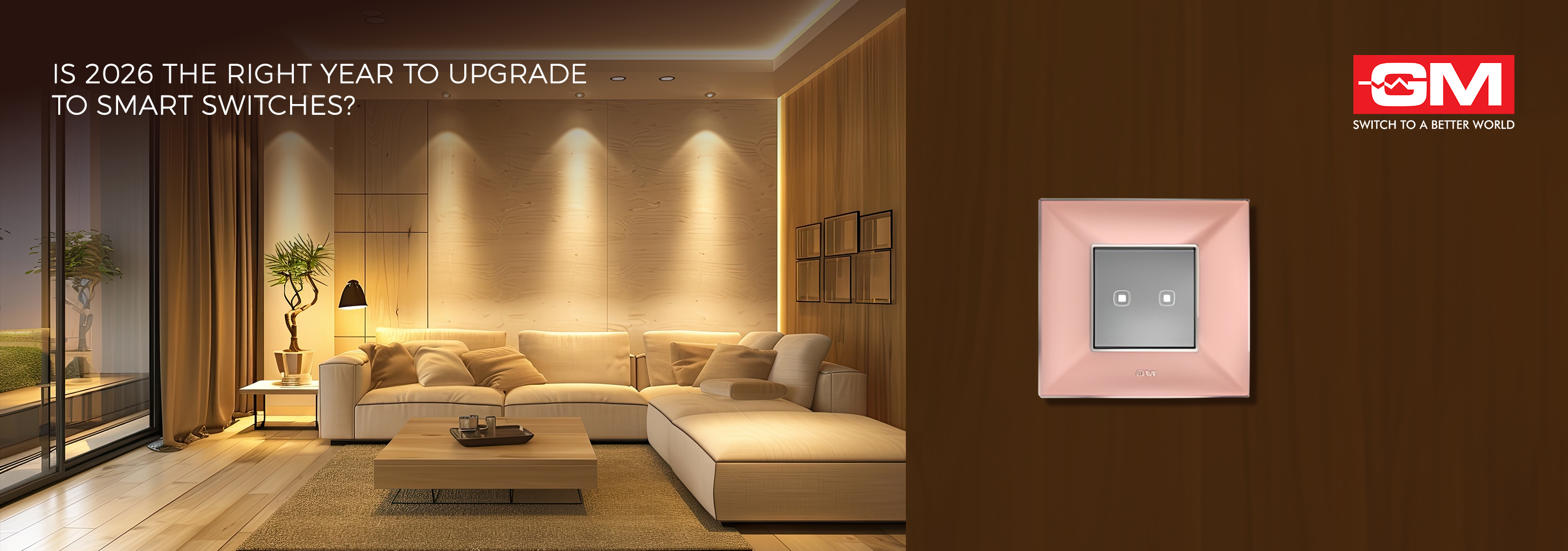
Picture this: you are already running late for work, and halfway to the office, a nagging thought strikes—did you turn off the bedroom AC? Now imagine resolving that worry with a single tap on your phone. This is not a distant dream anymore. Smart switches have transformed from expensive novelties into practical necessities for Indian homes. If rising electricity bills and the constant juggling of manual controls sound familiar, 2026 might be the perfect year to make the switch. This guide breaks down why now is the right time to upgrade and what options suit your home best.
The Evolution of Home Control
Two decades ago, controlling your home meant walking to every switchboard and flipping mechanical toggles. The introduction of modular switches changed the game by offering organised, aesthetically pleasing panels that fit modern interiors. However, the real transformation began when touch-based and app-controlled systems entered Indian households.
GM Modular switches have played a significant role in this evolution, consistently introducing designs that balance innovation with everyday practicality. What makes 2026 a turning point is simple: smart switch technology has matured. Early adopters dealt with connectivity issues and compatibility headaches, but those growing pains are behind us. Today, these devices are reliable, affordable, and built to handle Indian electrical conditions, including voltage fluctuations that once made smart home adoption risky.
Why Upgrade Now? The 2026 Advantage
The case for upgrading to smart switches has never been stronger. Here is what makes this year particularly compelling:
-
Measurable energy savings: Smart switches allow you to schedule lights and fans to operate only when needed. Many households report reducing unnecessary power consumption by 15-25% simply by eliminating standby waste and forgotten appliances.
-
Accessible pricing: Quality smart switches that cost upwards of ₹3,000 per unit three years ago are now available in the ₹1,500-2,500 range, making whole-home upgrades financially realistic.
-
Voice assistant integration: Seamless compatibility with Google Assistant and Amazon Alexa means you can control your home hands-free, particularly useful when cooking, caring for children, or relaxing after a long day.
-
Remote monitoring for peace of mind: Whether you are at the office or on vacation, smartphone apps let you check which switches are on and turn them off remotely. No more worrying about the iron or geyser.
-
Inverter and voltage compatibility: Modern smart switches from trusted brands like GM Modular are designed for Indian conditions, working smoothly with home inverters and handling the voltage variations common across the country.
Aesthetics Meet Intelligence
A common hesitation among homeowners is that smart technology looks industrial or out of place in carefully designed interiors. The reality in 2026 is quite the opposite.
GM Modular's i-Touch Series demonstrates how intelligence and elegance work together. These sleek glass-panel switches replace bulky plastic boards with touch-responsive surfaces that feel premium under your fingertips. The design philosophy follows GM Modular's FourFive design concept—creating products for the four walls of your home that appeal to all five senses.
Customisation extends to cover plates as well. Premium options include:
-
Tempered glass in multiple colors
-
Natural wood textures
-
Brushed metallic tones
-
Designer finishes from Naturalz and Arkios collections
These designer light switches complement any decor style, from minimalist apartments to traditional Indian homes. Upgrading to smart technology enhances rather than compromises your interior aesthetics.
Types of Smart Solutions for Every Home
Choosing the right smart switches depends on your home's age, budget, and desired automation level.
-
Retrofit Smart Modules slip behind existing switchboards, making them the most budget-friendly choice at ₹1,200-1,800 per switch point. GM Modular's i-Fi PRO switches are designed for this purpose, adding smart capabilities without rewiring. Ideal for rental apartments or homes where major electrical work is not feasible.
-
Wi-Fi Enabled Switches connect directly to your router at ₹1,500-2,500 per unit. They suit homeowners comfortable with basic electrical tasks and provide robust app-based control with scheduling features.
-
Complete Bus-Based Automation represents the premium tier for new constructions or extensive renovations. This integrated approach requires professional planning but delivers the most comprehensive smart home experience.
Explore GM Modular's home automation solutions to find the right fit for your needs.
Also Read: 6 Reasons to Choose Touch Switches Over Traditional Switches
Installation and Safety Considerations
Before purchasing smart switches, verify a few technical requirements. Most Wi-Fi-based switches need a stable 2.4GHz network—check your router settings since many dual-band routers default to 5GHz, which these devices cannot use.
Wiring configuration also matters. Some smart switches require a neutral wire (the blue wire in standard Indian wiring), while others work with simple two-wire setups found in older homes. GM Modular offers both variants, so confirm your home's wiring type before ordering. Any local electrician can check this during a routine visit.
Safety Warning: Always switch off the main power supply at your distribution board before attempting any electrical work. Never work with live wires.
Professional Installation Recommended: While some smart switches support DIY installation, we recommend hiring a licensed electrician for wiring modifications. Professional installation typically costs ₹200-400 per switch point and ensures safety and compliance with local codes. Also, secure your home Wi-Fi with a strong password to protect connected devices.
The year 2026 offers a rare convergence: mature technology, reasonable prices, and design options that rival the finest designer switches available. Whether your priority is cutting electricity costs, gaining convenience, or elevating your home's aesthetics, smart switches deliver meaningful benefits across all fronts. GM Modular bridges the gap between premium design and intelligent functionality, offering solutions that fit Indian homes and Indian budgets.
Explore GM Modular's smart switch collection at your nearest dealer or visit gmmodular.com to take the first step toward a smarter home.
Frequently Asked Questions
1. Do smart switches help reduce electricity bills?
Yes, smart switches can meaningfully reduce electricity costs. Scheduling features ensure lights and fans run only when needed, while monitoring helps identify energy-wasting habits. Many users report 15-25% savings on lighting and fan-related consumption after upgrading.
2. Can I install smart switches in an older house?
Absolutely. GM Modular's i-Fi PRO switches are specifically designed for retrofitting into existing homes. They work with standard Indian wiring configurations, so you can upgrade without major electrical renovations or rewiring projects.
3. Do smart switches work when the internet is down?
Yes, smart switches continue working manually during internet outages. You can turn them on or off using the physical touch panel just like regular switches. Only remote control and voice commands require an active internet connection.
4. Are GM Modular smart switches compatible with Alexa and Google Assistant?
Yes, GM Modular switches integrate seamlessly with both Amazon Alexa and Google Assistant. Once connected to your home Wi-Fi and linked through the respective apps, you can control lights and fans using simple voice commands.
5. What is the difference between regular modular switches and smart switches?
Regular modular switches provide only manual on/off control at the switchboard. Smart switches add remote smartphone access from anywhere, voice control through assistants, automated scheduling, scene creation for different moods, and energy monitoring—transforming basic switches into intelligent home controls.
Related Blogs

Bladeless Fan Buying Guide: 10 Checks | GM Modular
Bladeless Fan Buying Guide: 10 Things to Check Before You Buy A bladeless fan looks like the obvious upgrade. No spinning blades, a slim tower, a quiet hum, and a price that hints it must be the better choice. But the word “bladeless” on
Read More
What Is a GaN Charger? A Simple Guide
What Is a GaN Charger? Everything You Need to Know You have probably used gallium nitride for years without knowing it. Before it reached the charger on your wall, this material lit up the first white LEDs, powered blue lasers, and read the discs in
Read More
GM Artic Air 1: 3-in-1 Bladeless Tower Fan
Why the GM Artic Air 1 Is the Ultimate 3-in-1 Appliance for Every Season Picture one slim tower in the corner of your living room. In May, it cools you through a brutal afternoon. In August, it clears the damp, stale air the monsoon leaves beh
Read More
Wireless Charging vs Wired Charging: Which Is Faster?
Wireless Charging vs Wired Charging: Which Is Faster? If your phone is at 10% and you have twenty minutes before heading out, which charger should you grab: the cable or the pad? Wireless charging is everywhere now, yet most of us still reach for a
Read More