Blog
5 Geyser Energy-Saving Tips to Reduce Your Winter Electricity Bill
Updated on Jan 2026
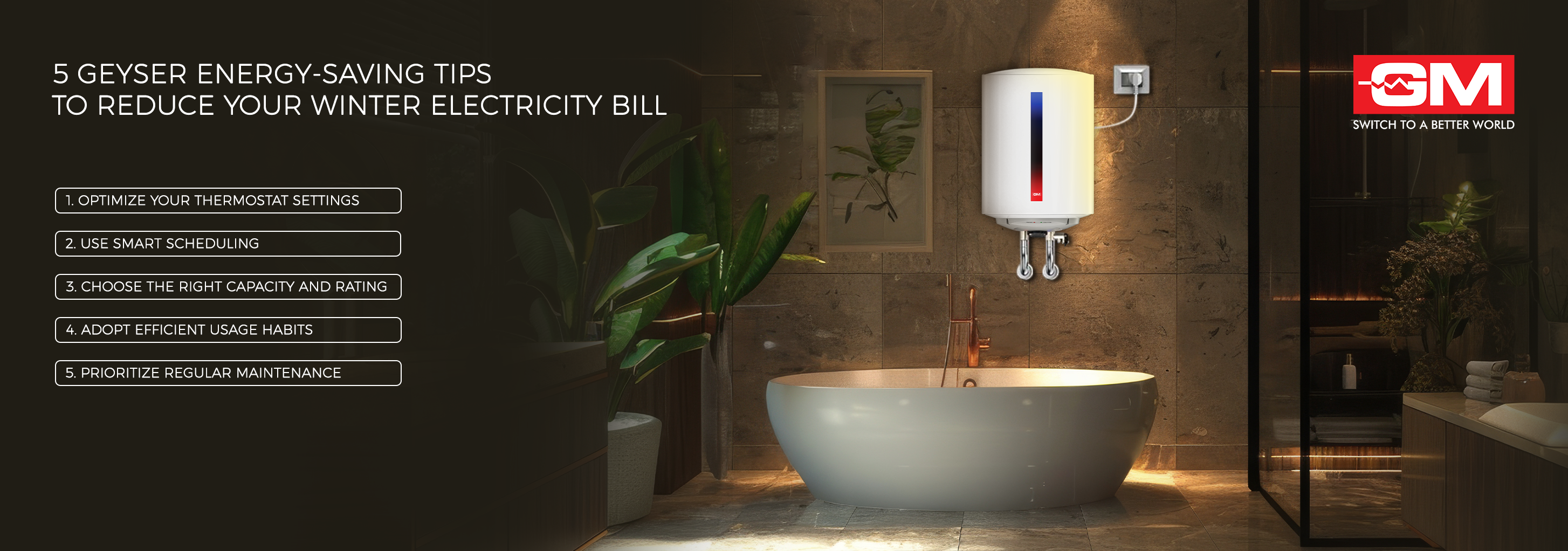
If you've ever opened your electricity bill in January and felt your heart sink, you're not alone. In most Indian homes, the geyser is the single biggest winter power consumer after the AC. A geyser alone can add ₹800-₹1,200 to a typical winter bill, making it one of the biggest energy drains. The good news? You don't have to choose between a hot shower and a reasonable bill. With a few smart adjustments, you can cut consumption significantly without sacrificing comfort.
Understanding Your Water Heater's Power Consumption
Most household geysers consume between 1,500 to 3,000 watts per hour of operation. A significant portion of this loss comes from "standing loss," where heat escapes even when you're not drawing hot water. This means your geyser energy saving potential lies not just in how you heat water, but in how you manage idle time. Understanding this pattern is the first step toward meaningful winter savings.
5 Proven Geyser Energy-Saving Tips
These geyser’s energy saving tips can reduce your winter electricity consumption by up to 30%. If you're short on time, start with Tips 1, 2, and 5; they deliver the highest impact with minimal effort.
1. Optimise Your Thermostat Settings
Lower your thermostat to 60°C for instant savings without losing comfort.
Setting your thermostat to 60°C hits the sweet spot between comfort and efficiency. Higher temperatures waste energy and increase scalding risk, while lower settings may not provide adequate warmth.
Most factory defaults are set higher than necessary. Check your unit's dial and adjust accordingly; this simple change alone can cut heating costs noticeably.
2. Use Smart Scheduling
Heat water only when needed; smart switches automate this effortlessly.
Leaving your geyser running around the clock is a major energy drain. Instead, heat water only when needed; typically 15-20 minutes before bath time.
Picture the morning rush: everyone needs hot water, but nobody remembers to switch off the geyser afterward. GM i-Fi smart switches solve this by letting you schedule heating cycles through your smartphone. This geyser power saver approach eliminates forgotten units and ensures you never pay for water you won't use.
3. Choose the Right Capacity and Rating
Right-sized, 5-star rated geysers prevent energy waste from day one.
An oversized unit wastes energy heating water you'll never use, while an undersized one works overtime. For a family of four, 15-25 litres typically works well.
More importantly, look for BEE (Bureau of Energy Efficiency) star ratings when purchasing. An energy-efficient geyser with a 5-star rating can consume up to 20% less power than lower-rated models, making the upfront investment worthwhile.
4. Adopt Efficient Usage Habits
Small habit changes like bucket baths and fixing leaks add up to big savings.
Simple behavioural changes make a real difference. Using a bucket instead of a shower can reduce hot water consumption by nearly half. If you prefer showers, limiting duration to under 5 minutes helps conserve heated water.
Additionally, fixing dripping hot water taps prevents continuous reheating cycles that silently drain electricity throughout the day.
Before making a purchase, read the Water Heater Buying Guide
5. Prioritise Regular Maintenance
Annual descaling keeps your geyser running at peak efficiency.
Mineral deposits inside your tank act as insulation barriers, forcing the heating element to work harder. Annual descaling maintains optimal heat transfer and keeps your geyser's power saver performance at its best.
A well-maintained unit operates efficiently for years, whereas neglected ones may lose up to 25% efficiency over time.
Why Upgrade to GM Modular Water Heaters?
The Problem: Older geysers lose efficiency over time, wasting power through poor insulation and sluggish heating elements. A 2000W geyser running unnecessarily for 1 extra hour daily can add around 60 units per month to your bill.
The Solution: GM Modular Water Heaters feature enhanced insulation that minimises standing loss and faster heating elements that reduce active operation time. Built with multiple safety mechanisms, including thermal cutoffs and pressure release valves, these units reflect GM Modular's "Switch to a Better World" commitment.
Bonus: Pair your water heater with GM i-Fi smart switches for automated scheduling, and you create a complete geyser power saver system that maximises savings effortlessly.
Important Safety Precautions
Always turn off the main power supply before performing any maintenance. Ensure your home's electrical system includes properly rated MCBs (Miniature Circuit Breakers) to prevent overload during high winter usage.
For installation, descaling, or element replacement, we recommend consulting a licensed electrician to ensure safety and compliance with local regulations.
Reducing your winter electricity bill doesn't require giving up hot water comfort. By optimising thermostat settings, using smart scheduling, choosing the right capacity, adopting efficient habits, and maintaining your unit regularly, you can achieve meaningful geyser energy-saving results.
Your first step: Check your thermostat setting today and adjust it to 60°C if it's higher. Track your usage for one week to see the difference.
For a long-term upgrade, explore GM Modular's range of water heaters and smart home solutions at your nearest dealer or visit gmmodular.com
Once you’ve chosen the right model, check out our blog on How to Install a Water Heater
Frequently Asked Questions
1. How much electricity does a water heater consume in an hour?
A typical unit consumes 1,500 to 3,000 watts per hour during active heating. Actual consumption depends on tank capacity, insulation quality, and thermostat settings. Modern geysers with superior insulation reduce this noticeably.
2. What is the ideal temperature setting for geyser energy saving?
Setting your thermostat to 60°C provides the best balance for efficiency while ensuring comfortably hot water. This temperature eliminates harmful bacteria without the unnecessary consumption that comes from overheating.
3. Can a smart switch act as a geyser power saver?
Yes, smart switches enable scheduled heating cycles, so your unit operates only when needed. This eliminates wasteful standby consumption and can reduce energy use significantly over a billing cycle.
4. Does switching the geyser on and off frequently save electricity?
Yes, heating water only when needed is more efficient than continuous operation. The energy required to reheat from room temperature is typically less than the cumulative standing losses from keeping water hot all day.
5. How often should I service my water heater for best efficiency?
Annual servicing is recommended for optimal performance. Professional descaling removes mineral buildup that reduces heating efficiency. Schedule maintenance before winter begins each year for best results.
Related Blogs
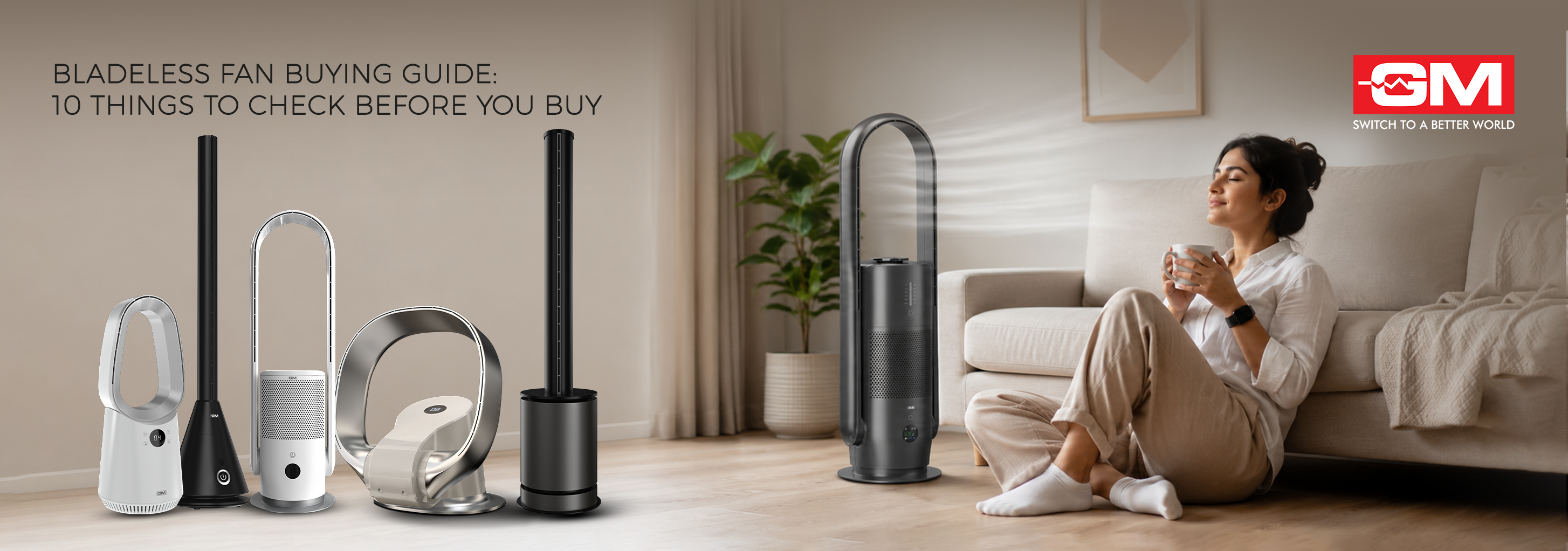
Bladeless Fan Buying Guide: 10 Checks | GM Modular
Bladeless Fan Buying Guide: 10 Things to Check Before You Buy A bladeless fan looks like the obvious upgrade. No spinning blades, a slim tower, a quiet hum, and a price that hints it must be the better choice. But the word “bladeless” on
Read More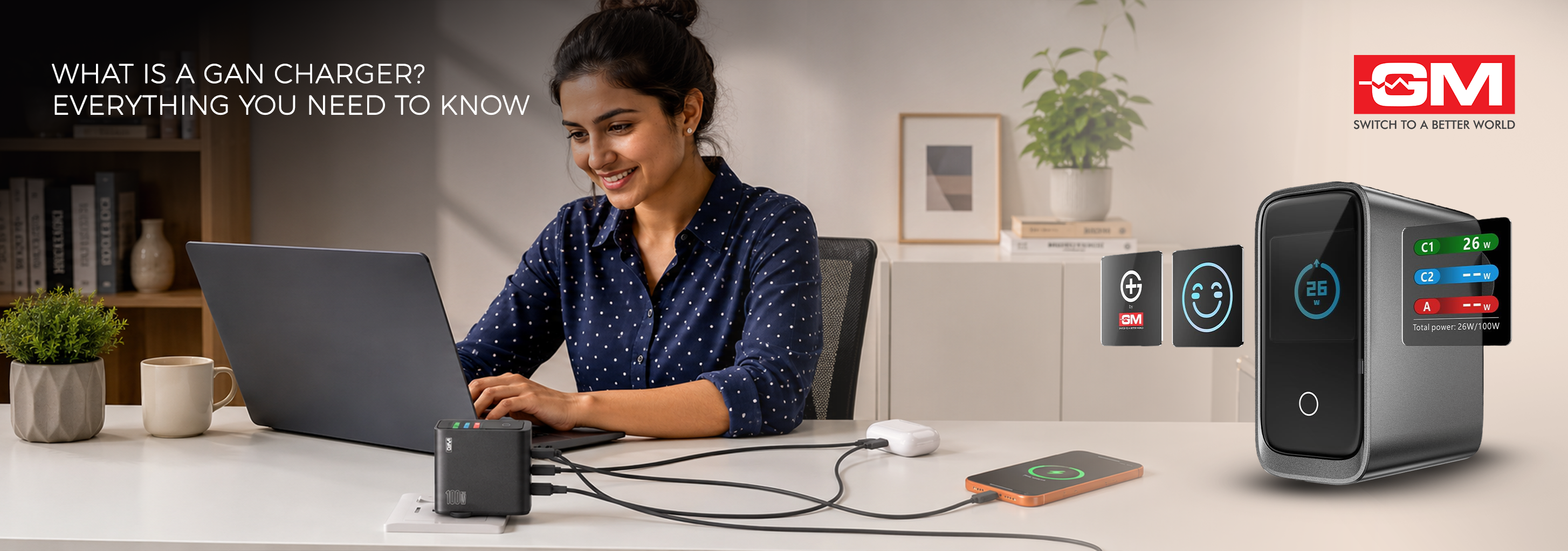
What Is a GaN Charger? A Simple Guide
What Is a GaN Charger? Everything You Need to Know You have probably used gallium nitride for years without knowing it. Before it reached the charger on your wall, this material lit up the first white LEDs, powered blue lasers, and read the discs in
Read More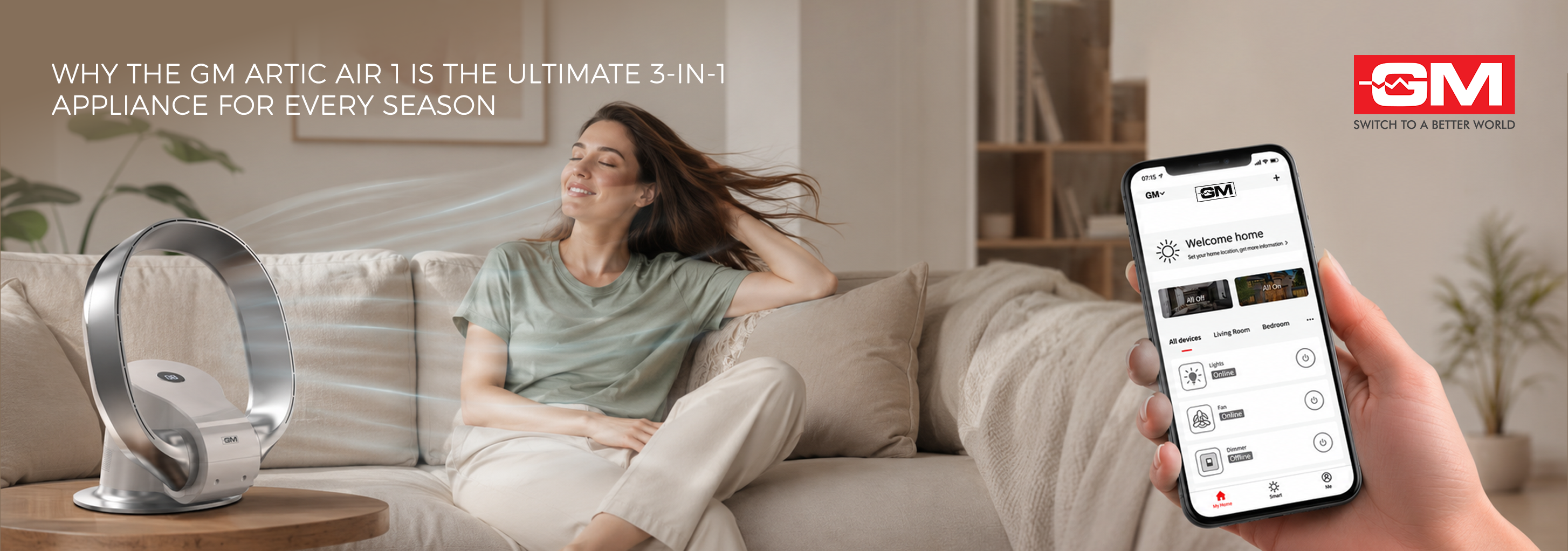
GM Artic Air 1: 3-in-1 Bladeless Tower Fan
Why the GM Artic Air 1 Is the Ultimate 3-in-1 Appliance for Every Season Picture one slim tower in the corner of your living room. In May, it cools you through a brutal afternoon. In August, it clears the damp, stale air the monsoon leaves beh
Read More
Wireless Charging vs Wired Charging: Which Is Faster?
Wireless Charging vs Wired Charging: Which Is Faster? If your phone is at 10% and you have twenty minutes before heading out, which charger should you grab: the cable or the pad? Wireless charging is everywhere now, yet most of us still reach for a
Read More