Blog
Exhaust Fan Power Consumption: Everything You Need to Know
Updated on Aug 2025
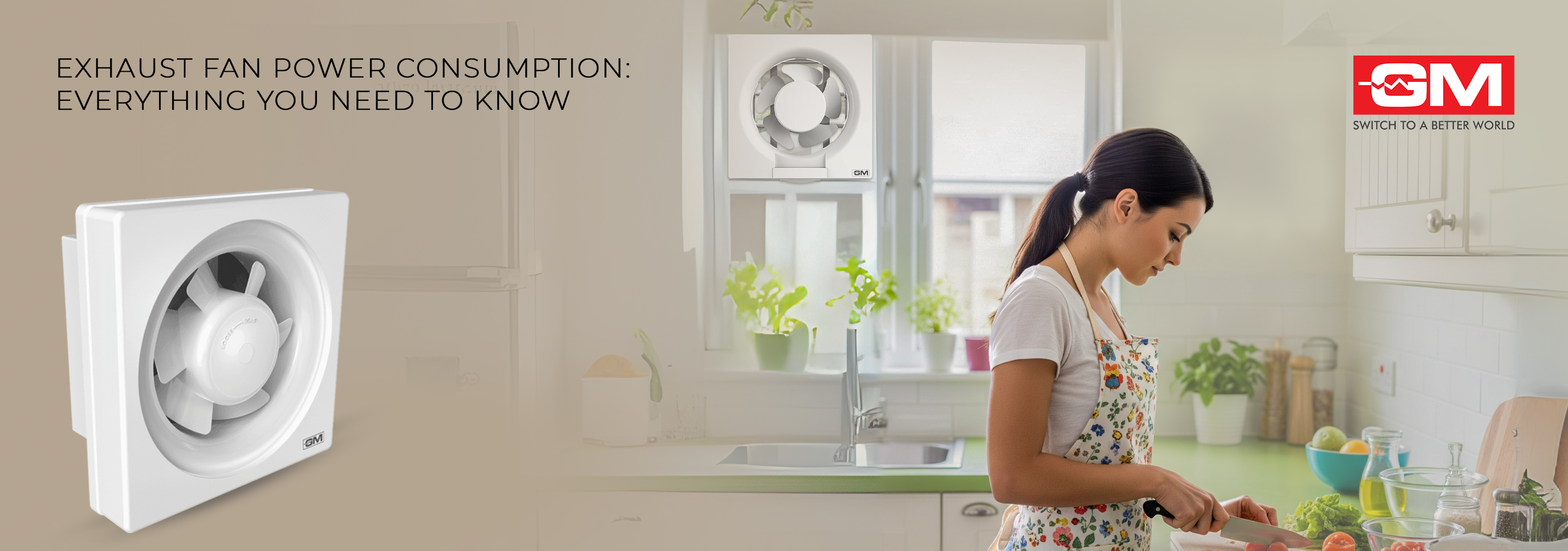
Good ventilation relies on a reliable exhaust fan, which often runs quietly in bathrooms and kitchens. Though small, these fans can add to your energy bill, especially if they are old or oversized. In larger spaces like restaurants or big homes, multiple fans can significantly increase power use. Understanding their energy consumption helps create a more efficient home.
Typical Exhaust Fan Wattage Consumption
The power an exhaust fan uses depends on its size, efficiency, and motor type. Here’s a quick guide:
Small Bathroom Fans (15–25W)
Compact and low-power, these run for hours with minimal impact on your bill. About 2 hours of daily use roughly 1 kWh per month, costing only a small amount.
Standard Kitchen Fans (30–50W)
These work harder to clear smoke and steam. Used 3–4 hours daily, they consume around 4 to 6 kWh monthly, adding ₹30 to ₹50 to your bill.
Heavy-Duty or Commercial Fans (60–100W and up)
Designed for industrial use, these have high power needs and should be chosen carefully for home use to avoid waste.
To calculate consumption:
Wattage × Hours Used ÷ 1000 = Units (kWh)
Matching the fan to your actual needs helps avoid overspending on ventilation.
Check out our guide on 7 Different Types of Exhaust Fans & Their Best Uses.
What Affects Exhaust Fan Energy Consumption?
Your exhaust fan might show low power use on paper, but it still consumes more energy over time. Here’s why:
Motor Type
BLDC motors are much more efficient than traditional induction motors, using up to 60% less electricity and lasting longer.
Airflow Capacity
Fans with higher airflow (measured in CFM) use more power, so pick a fan that matches your room size.
Usage Time
A fan running 6 to 8 hours daily can add up quickly. Using a timer helps control this.
Cleanliness
Dust and grease buildup make the fan work harder, raising power use. Regular cleaning boosts efficiency.
Curious about how exhaust fans actually help? Read our blog on how exhaust fans work to improve indoor air quality.
Choosing the Right Exhaust Fan: What Really Matters
Now that you understand power consumption differences, here is how to choose the right exhaust fan based on energy efficiency and function, not just looks or price.
1. Match the Fan to the Room Size
Avoid heavy-duty fans for small bathrooms as they waste energy and are noisy. Use 15 to 25 watts for small bathrooms, 30 to 50 watts for kitchens, and 60 watts or more for commercial spaces. If unsure, calculate room volume and airflow needs before choosing.
2. Look for Energy-Efficient Features
Many brands now offer exhaust fans with 5-star energy ratings, BLDC motors, or low-wattage designs that help cut electricity use over time. Although these models may cost more upfront, they save money in the long run. Some even include humidity sensors and smart features that turn the fan off automatically when not needed.
3. Prioritise Noise Level
The quieter the fan the better, especially in bedrooms, bathrooms, or offices. Aim for noise levels below 40 dB for near-silent operation.
4. Opt for Rust-Resistant Materials
Especially in bathrooms and kitchens where moisture is common, stainless steel or powder- coated blades resist corrosion and last longer. This ensures consistent airflow without putting extra strain on the motor.
5. Consider Easy Maintenance Designs
Detachable front grills and easy-to-wipe blades make cleaning simple. Regular maintenance boosts airflow and helps keep the exhaust fan’s electricity use low.
6. Pay Attention to Brand Warranty & Service
A good exhaust fan should last 5 to 10 years, and having reliable after-sales support is just as important. Though small and often overlooked, it plays a big role in comfort and energy use. When chosen wisely and maintained well, it runs efficiently without raising your power bill. But an old, dusty, or oversized fan can quietly increase energy costs. Checking the specs, wattage, and condition now can lead to meaningful savings over time.
Planning to install one yourself? Don’t miss our step-by-step exhaust fan installation guide for beginners.
Frequently Asked Questions
1. What’s a good wattage range for a home exhaust fan?
A. Typically between 15 and 50 watts, depending on the fan’s size and placement. Lower wattage suits bathrooms, while kitchens may need slightly more.
2. Are exhaust fans with BLDC motors worth it?
A. Yes, they use 30 to 60% less power, operate more quietly, and have a longer lifespan than traditional induction motor fans.
3. Can I run an exhaust fan all night?
A. It's not advisable unless necessary, as it increases electricity use. Consider using a timer or smart plug to limit run-time.
4. How often should I clean my exhaust fan?
A. Ideally every 3 to 4 weeks, especially in kitchens. Regular cleaning improves efficiency and reduces energy consumption.
Related Blogs
Bladeless Fan Buying Guide: 10 Checks | GM Modular
Bladeless Fan Buying Guide: 10 Things to Check Before You Buy A bladeless fan looks like the obvious upgrade. No spinning blades, a slim tower, a quiet hum, and a price that hints it must be the better choice. But the word “bladeless” on
Read More
What Is a GaN Charger? A Simple Guide
What Is a GaN Charger? Everything You Need to Know You have probably used gallium nitride for years without knowing it. Before it reached the charger on your wall, this material lit up the first white LEDs, powered blue lasers, and read the discs in
Read More
GM Artic Air 1: 3-in-1 Bladeless Tower Fan
Why the GM Artic Air 1 Is the Ultimate 3-in-1 Appliance for Every Season Picture one slim tower in the corner of your living room. In May, it cools you through a brutal afternoon. In August, it clears the damp, stale air the monsoon leaves beh
Read More
Wireless Charging vs Wired Charging: Which Is Faster?
Wireless Charging vs Wired Charging: Which Is Faster? If your phone is at 10% and you have twenty minutes before heading out, which charger should you grab: the cable or the pad? Wireless charging is everywhere now, yet most of us still reach for a
Read More