Blog
What is the Difference Between a Ceiling Fan and a Table Fan?
Updated on Dec 2025
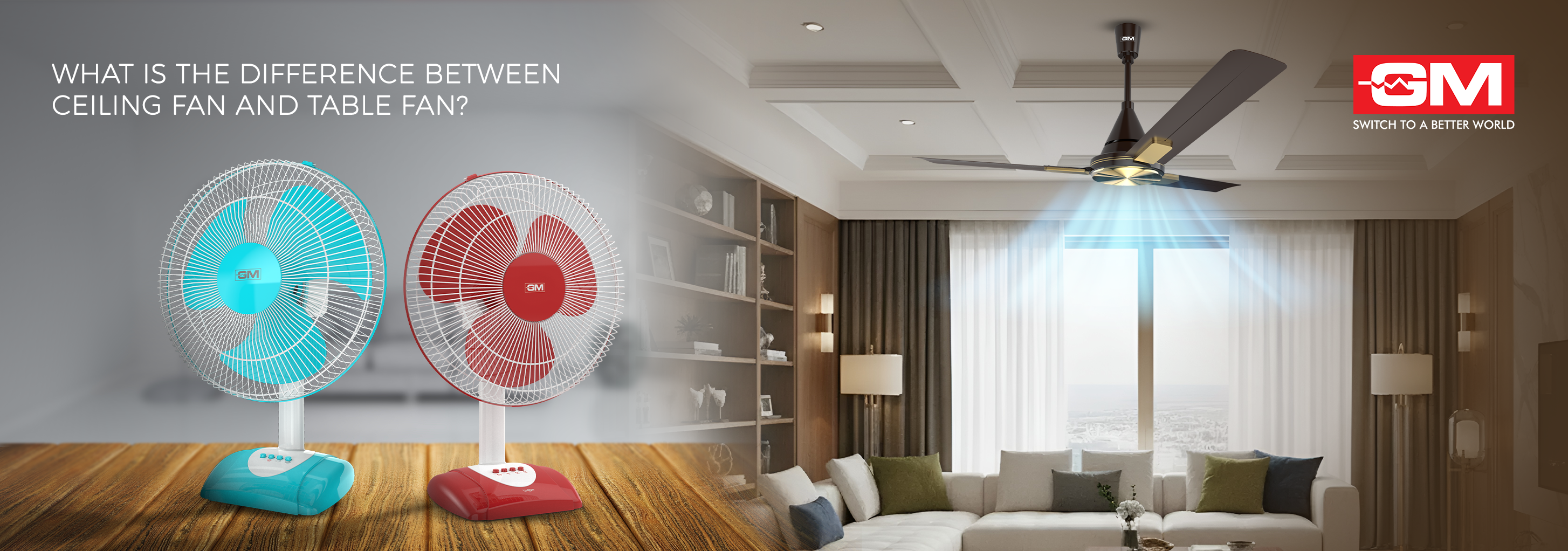
Fans are easy to use and save energy, so most people use them to keep a room cool and comfortable. But before you buy one, you should know what makes a ceiling fan different from a table fan. They both move air, but they do it in very different ways and can be used in very different ways. Let's look at these differences in more detail so you can pick the best choice for your home or office.
How a Ceiling Fan Works
There is a ceiling fan on the ceiling that moves air around the whole room. The blades of a fan move air down when they spin, which makes you feel cooler by moving the air instead of lowering the temperature. Most ceiling fans have electric motors that are very efficient, so they can run for long periods of time without using too much power.
The difference between a ceiling fan and a table fan becomes clear here, ceiling fans are permanent fixtures designed for uniform airflow, making them ideal for bedrooms, living rooms, and dining areas. GM Modular’s range of ceiling fans, for instance, combines efficient motors with modern designs that complement any interior décor.
Want to know how much energy your fan uses? Read our blog on Ceiling Fan Power Consumption.
How a Table Fan Works
To understand the other side of the comparison, it helps to know the working principle of a table fan. A table fan has a smaller motor that spins its blades to create directed airflow. Unlike ceiling fans, which push air across the whole room, table fans focus on a specific area.
This is why they are preferred for smaller or personal spaces, like study tables, office desks, or kitchen counters. The oscillating feature adds convenience, allowing air to move from side to side for better coverage. Because of its compact design, it can be placed on any flat surface and easily moved to another room.
Table Fan vs Ceiling Fan: Design and Portability
One major difference between a ceiling fan and a table fan lies in their design and mobility. A ceiling fan is a permanent installation and becomes a part of the room’s structure, while a table fan offers portability and convenience. Here’s how they differ:
-
Ceiling fans are fixed to the ceiling and distribute air across a wide area.
-
Table fans are lightweight and can be carried wherever airflow is needed.
In the debate of table fan vs ceiling fan, portability is the key factor. If flexibility and movement matter most, a table fan is a versatile pick.
Airflow and Cooling Efficiency
Another noticeable difference between a ceiling fan and a table fan is in their cooling mechanism. Ceiling fans have broader blades and a higher mounting point, which help them cover larger spaces evenly. Table fans, however, offer a focused breeze that directly hits the user.
If you’re evaluating a table fan vs a ceiling fan, which is better for overall comfort, the ceiling fan wins for general room coverage. But for focused comfort, like when studying or working, the table fan provides more benefit.
Energy Efficiency and Maintenance
Ceiling fans are known for their high energy efficiency. They can run for hours with minimal power consumption, making them cost-effective in the long run. Table fans, though smaller, have motors that consume slightly more power relative to their output, especially at higher speed settings.
However, maintaining a table fan is easier. The working principle of a table fan involves simpler parts, so cleaning and servicing it takes just a few minutes. Ceiling fans might require ladder access and periodic dusting, but do not need frequent maintenance.
Aesthetic Value and Usage Purpose
The difference between a ceiling fan and a table fan is also about aesthetics. Ceiling fans enhance the look of interiors with their modern blades, finishes, and lighting options. They come in various styles that match contemporary or traditional décor.
Table fans lean more toward functionality than décor. While many models now feature stylish designs and metallic finishes, their main advantage lies in ease of placement and movement.
Benefits of a Table Fan:
The benefits of a table fan go beyond simply cooling a space. They offer unmatched convenience and flexibility. Some of the key benefits include:
-
Portability that allows use in different rooms or even outdoor areas
-
Directional airflow for concentrated cooling
-
Affordable cost compared to ceiling fans or air conditioners
-
Simple installation, just plug and use
Overall, table fans are perfect for personal use, small apartments, or work environments that demand targeted airflow.
Table Fan vs Ceiling Fan: Which Is Better?
Choosing between a table fan and a ceiling fan, which is better, depends entirely on individual requirements. If you have a large room and want a permanent solution, go for a ceiling fan. It offers consistent airflow, lower energy costs, and a decorative advantage.
If you live in a smaller space or prefer flexibility, then a table fan would suit you better. It’s light, easy to move, and provides instant cooling where needed. Many users choose both, a ceiling fan for base air circulation and a table fan for added airflow in specific spots during peak summer.
Choosing the Ideal Fan for Your Space
Now that you understand the difference between a ceiling fan and a table fan, it’s easier to decide which to buy. Ceiling fans deliver steady, uniform cooling, while table fans prioritise flexibility and personal comfort. Your ideal choice depends on room size, design preference, and intended use.
GM Modular offers a complete range of both ceiling and table fans tailored to diverse needs. Whether you want sleek ceiling designs for your living room or compact table fans for your workspace, GM Modular’s fans combine technology, style, and performance effortlessly.
Also Read: Tower Fan vs Pedestal Fan: A Complete Comparison Guide
Frequently Asked Questions
1. What is the main difference between a ceiling fan and a table fan?
The main difference between a ceiling fan and a table fan is in installation and coverage. Ceiling fans are fixed on ceilings and cool larger areas, while table fans are portable and designed for personal use.
2. How does the working principle of a table fan differ from that of a ceiling fan?
The working principle of a table fan converts electrical energy into mechanical rotation for direct airflow, while ceiling fans circulate air downward throughout an entire room.
3. Table fan vs ceiling fan: Which is better for small rooms?
For small rooms, a table fan is more effective. It’s compact, easy to move and provides direct cooling without installation.
4. What are the benefits of a table fan compared to a ceiling fan?
The benefits of a table fan include portability, ease of maintenance, affordability and precise airflow. It’s ideal for targeted comfort in smaller or temporary spaces.
5. Can ceiling and table fans be used together?
Yes. Using both together enhances air circulation; ceiling fans handle overall airflow while table fans create stronger airflow in specific areas.
Related Blogs

Bladeless Fan Buying Guide: 10 Checks | GM Modular
Bladeless Fan Buying Guide: 10 Things to Check Before You Buy A bladeless fan looks like the obvious upgrade. No spinning blades, a slim tower, a quiet hum, and a price that hints it must be the better choice. But the word “bladeless” on
Read More
What Is a GaN Charger? A Simple Guide
What Is a GaN Charger? Everything You Need to Know You have probably used gallium nitride for years without knowing it. Before it reached the charger on your wall, this material lit up the first white LEDs, powered blue lasers, and read the discs in
Read More
GM Artic Air 1: 3-in-1 Bladeless Tower Fan
Why the GM Artic Air 1 Is the Ultimate 3-in-1 Appliance for Every Season Picture one slim tower in the corner of your living room. In May, it cools you through a brutal afternoon. In August, it clears the damp, stale air the monsoon leaves beh
Read More
Wireless Charging vs Wired Charging: Which Is Faster?
Wireless Charging vs Wired Charging: Which Is Faster? If your phone is at 10% and you have twenty minutes before heading out, which charger should you grab: the cable or the pad? Wireless charging is everywhere now, yet most of us still reach for a
Read More