Blog
Difference Between BLDC and Induction Motor
Updated on Nov 2025
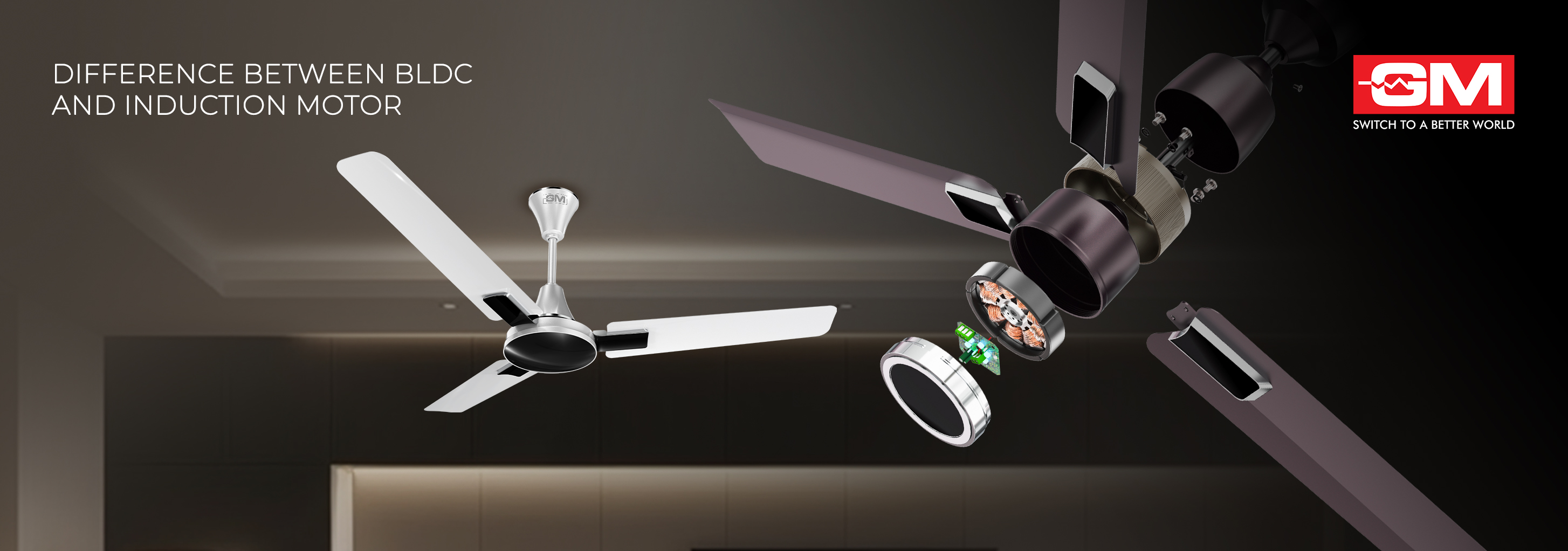
When we talk about ceiling fans, energy efficiency, or even advanced appliances, two terms that often pop up are BLDC motor vs Induction motor. And for many people, it gets confusing when it is about understanding the actual difference, the BLDC technology, and whether it is worth upgrading.
Traditionally, induction motors have been powering our fans, pumps, and appliances for decades. They are rugged, affordable, and reliable. But in recent years, BLDC motors (Brushless DC Motors) have started replacing them, especially in energy-saving ceiling fans. With electricity bills constantly on the rise and homes becoming smarter, consumers are more curious than ever about which technology is better.
If you are looking to understand the key difference, here is a complete breakdown and comparison between BLDC and induction motor in terms of efficiency, cost, performance, and durability.
What is an Induction Motor?
An induction motor is an AC (alternating current) motor that works on the principle of electromagnetic induction. When AC flows through the stator (the stationary part of the motor), it creates a rotating magnetic field. This field induces current in the rotor (the rotating part), which makes it spin.
-
Pros: Simple design, affordable, low maintenance.
-
Cons: Consumes more power, generates more heat, less efficient at variable speeds.
Induction motors are still widely used because they are robust and time-tested, but they lack the efficiency that modern appliances demand.
What is a BLDC Motor?
A BLDC motor stands for Brushless DC Motor. Unlike traditional motors, it doesn’t use brushes for transferring current. Instead, it uses electronic controllers and permanent magnets to generate motion.
In simple terms, BLDC motors are “smarter” because they operate with electronic commutation instead of mechanical brushes, leading to higher efficiency and longer life.
-
Pros: Highly energy-efficient, quieter, longer lifespan, and supports advanced features like remote control in fans.
-
Cons: Slightly more expensive due to advanced electronics.
This is why BLDC technology is now popular in ceiling fans, electric vehicles, and appliances where efficiency matters the most.
If you want a deep dive into BLDC technology and its pros and cons, read What Are BLDC Fans? Advantages & Disadvantages Explained
BLDC Motor vs Induction Motor: Key Differences
1. Efficiency
When it comes to efficiency, the gap between the two motors is quite significant. An induction motor wastes a good portion of electrical energy as heat due to resistance in its coils and friction from mechanical parts. This means that while it does the job, it ends up consuming more power.
On the other hand, a BLDC motor is designed to minimize these losses. It uses electronic controllers and permanent magnets, which ensure that most of the input energy is converted directly into useful motion. That’s why BLDC vs induction motor efficiency always tips in favor of BLDC technology, often saving up to 50–65% electricity when used in ceiling fans.
2. Power Consumption
The efficiency difference translates directly into power consumption. A regular ceiling fan powered by an induction motor consumes about 70–80 watts on full speed.
A BLDC ceiling fan, however, uses just 28–35 watts for the same air delivery. For households running fans for long hours every day, this difference can result in substantial savings on the electricity bill over the course of a year.
3. Performance and Speed Control
Induction motors usually perform best at fixed speeds. While they are dependable, they lack precision when it comes to smooth variation in speed. You may notice jerky changes or reduced efficiency at lower speeds.
In contrast, BLDC motors are inherently better at handling variable speed control. Paired with remote controls or smart apps, they allow effortless adjustments, sleep timers, and integration with smart home systems. This makes them more versatile for modern usage.
4. Durability and Maintenance
Because induction motors rely on brushes and mechanical commutation, wear and tear are inevitable. Over years of usage, parts may need servicing or replacement. In comparison, BLDC motors do not use brushes at all. With fewer moving parts and less friction, their lifespan is considerably longer, and they require minimal maintenance. This is one reason why many people view BLDC fans as a “buy once, forget for years” investment.
5. Noise Levels
Noise is another area where the difference is obvious. Induction motor fans produce a low hum, especially at high speeds, which can be disturbing in quiet environments like bedrooms, study rooms, or offices. BLDC motor fans, with their brushless design, operate almost silently. This quiet operation is one of the main reasons people upgrade to BLDC fans, even if their old induction fans are still working fine.
6. Heat Generation
Every motor generates some heat, but the extent varies. Induction motors lose a significant amount of input energy as heat, which not only reduces efficiency but also makes the motor body warmer. Over time, this can add stress to the fan’s internal components. BLDC motors, however, produce very little heat, keeping the motor cool and efficient even after hours of continuous use.
7. Cost Factor
One of the few areas where induction motors still have an advantage is cost. An induction motor fan is cheaper upfront, often by ₹500–1000, making it attractive for budget-conscious buyers. BLDC fans are priced slightly higher due to advanced electronics and features, but the long-term savings in electricity bills generally cover this difference within a couple of years.
8. Technology and Applications
Lastly, their usage across industries also highlights their differences. Induction motors are still the go-to option for pumps, compressors, and budget ceiling fans because of their ruggedness and low cost. BLDC motors, meanwhile, dominate in energy-sensitive applications, modern ceiling fans, electric vehicles, drones, and high-end appliances, where efficiency and smart control matter more than initial cost.
For a comparison that contrasts BLDC and conventional fans, read our blog on BLDC Fans vs Normal Fans
Which Motor Should You Choose?
If you’re stuck in the BLDC motor vs induction motor debate, the right choice really comes down to your priorities. Induction motors are tried, tested, and cost-friendly. They do their job well and continue to be popular where budget matters most. But if you’re looking for a motor that saves energy, runs silently, lasts longer, and pairs with smart technology, BLDC motors are the clear winner.
In times where efficiency and sustainability are becoming necessities rather than luxuries, BLDC technology is leading the way. While induction motors will remain relevant for basic uses, BLDC motors are shaping the future of fans, appliances, and even vehicles. Thus, the next time you’re buying a fan or considering an appliance upgrade, consider long-term, the smarter investment often lies with BLDC.
To see all the motor types available, don’t miss our blog on Types of Ceiling Fan Motors
Frequently Asked Questions
Q. Are BLDC fans really better than induction fans?
Yes, BLDC fans consume almost 50% less power, run silently, and last longer. While they cost more upfront, the savings on electricity bills often outweigh the extra cost.
Q. Why are induction motors still used?
Induction motors are cheaper, simpler in design, and suitable for appliances where cost matters more than efficiency, like pumps and budget ceiling fans.
Q. BLDC vs Induction motor efficiency, which is higher?
BLDC motors have higher efficiency (up to 85–90%) compared to induction motors (60–70%). This is why they’re becoming the preferred choice for modern energy-efficient appliances.
Q. Why are BLDC fans considered eco-friendly?
They use almost half the electricity of induction fans, produce less heat, and last longer, reducing both energy demand and electronic waste.
Q. Can induction motors still be a good choice?
Yes, for budget-friendly or occasional use, induction fans are reliable. But for daily use, BLDC fans save more energy and money long term.
Related Blogs
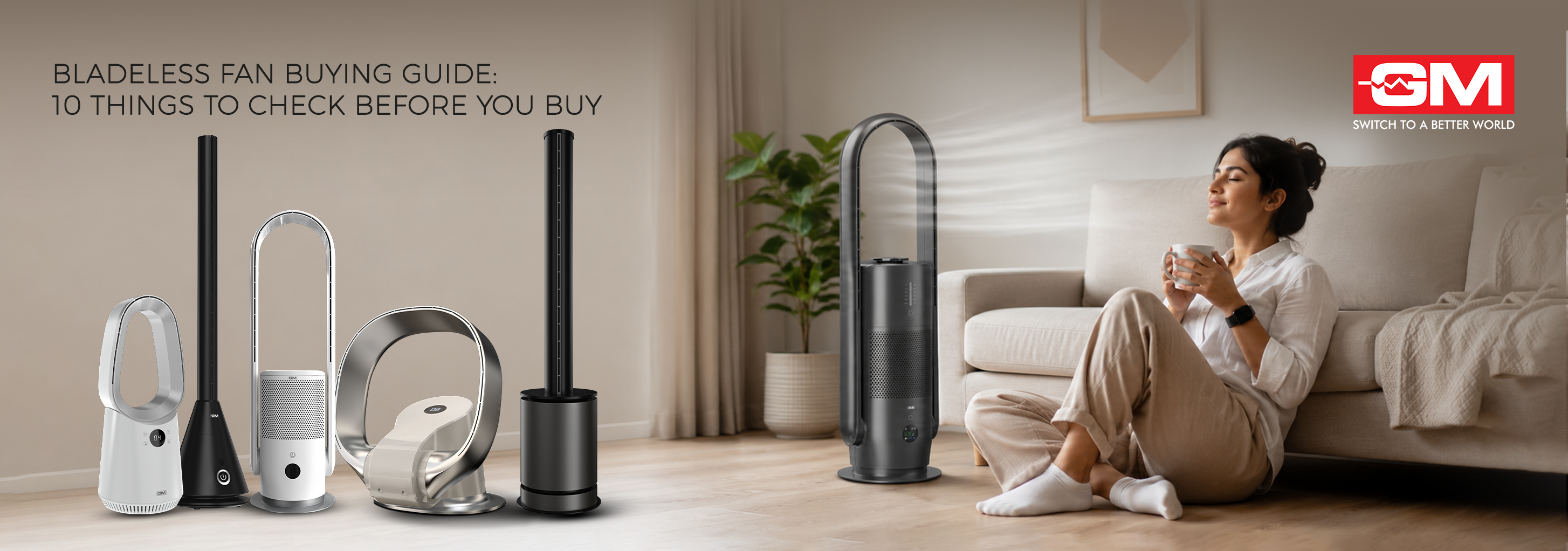
Bladeless Fan Buying Guide: 10 Checks | GM Modular
Bladeless Fan Buying Guide: 10 Things to Check Before You Buy A bladeless fan looks like the obvious upgrade. No spinning blades, a slim tower, a quiet hum, and a price that hints it must be the better choice. But the word “bladeless” on
Read More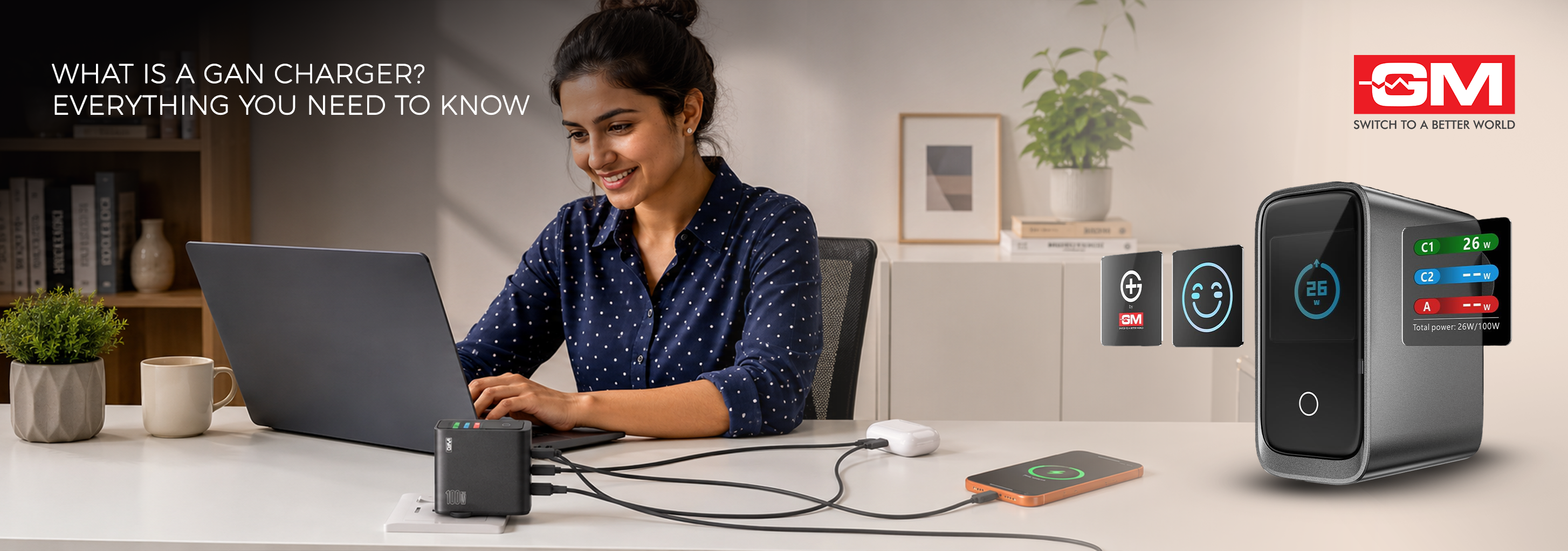
What Is a GaN Charger? A Simple Guide
What Is a GaN Charger? Everything You Need to Know You have probably used gallium nitride for years without knowing it. Before it reached the charger on your wall, this material lit up the first white LEDs, powered blue lasers, and read the discs in
Read More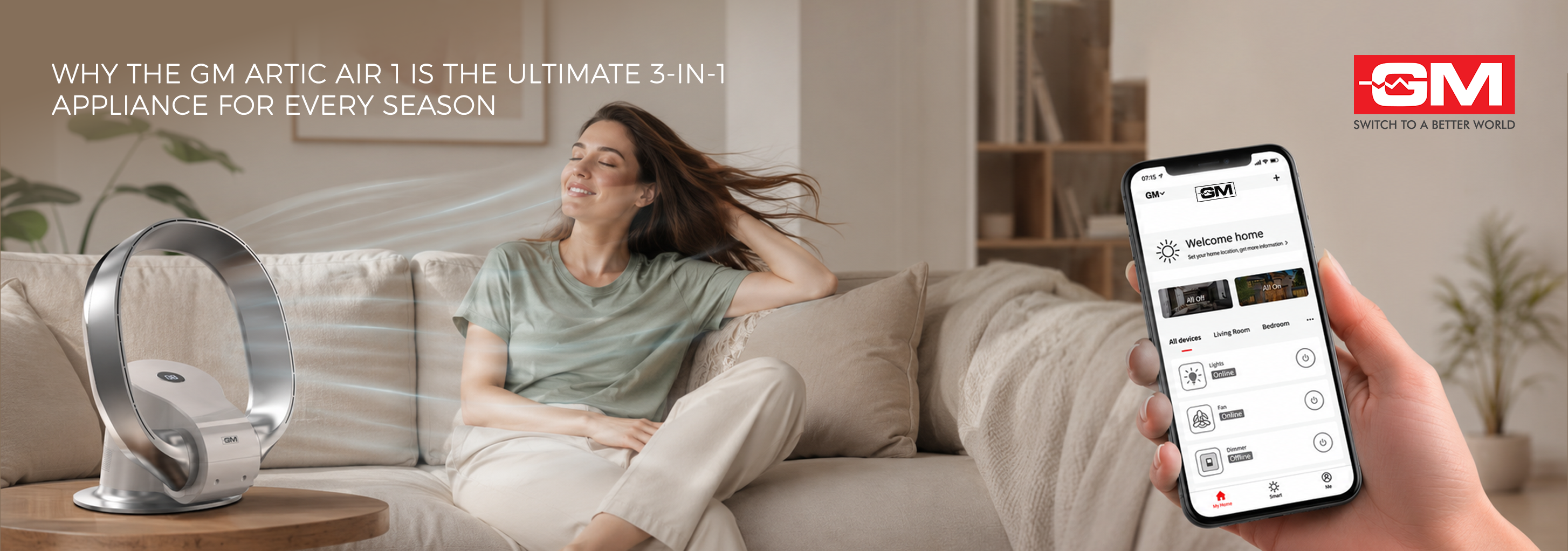
GM Artic Air 1: 3-in-1 Bladeless Tower Fan
Why the GM Artic Air 1 Is the Ultimate 3-in-1 Appliance for Every Season Picture one slim tower in the corner of your living room. In May, it cools you through a brutal afternoon. In August, it clears the damp, stale air the monsoon leaves beh
Read More
Wireless Charging vs Wired Charging: Which Is Faster?
Wireless Charging vs Wired Charging: Which Is Faster? If your phone is at 10% and you have twenty minutes before heading out, which charger should you grab: the cable or the pad? Wireless charging is everywhere now, yet most of us still reach for a
Read More